

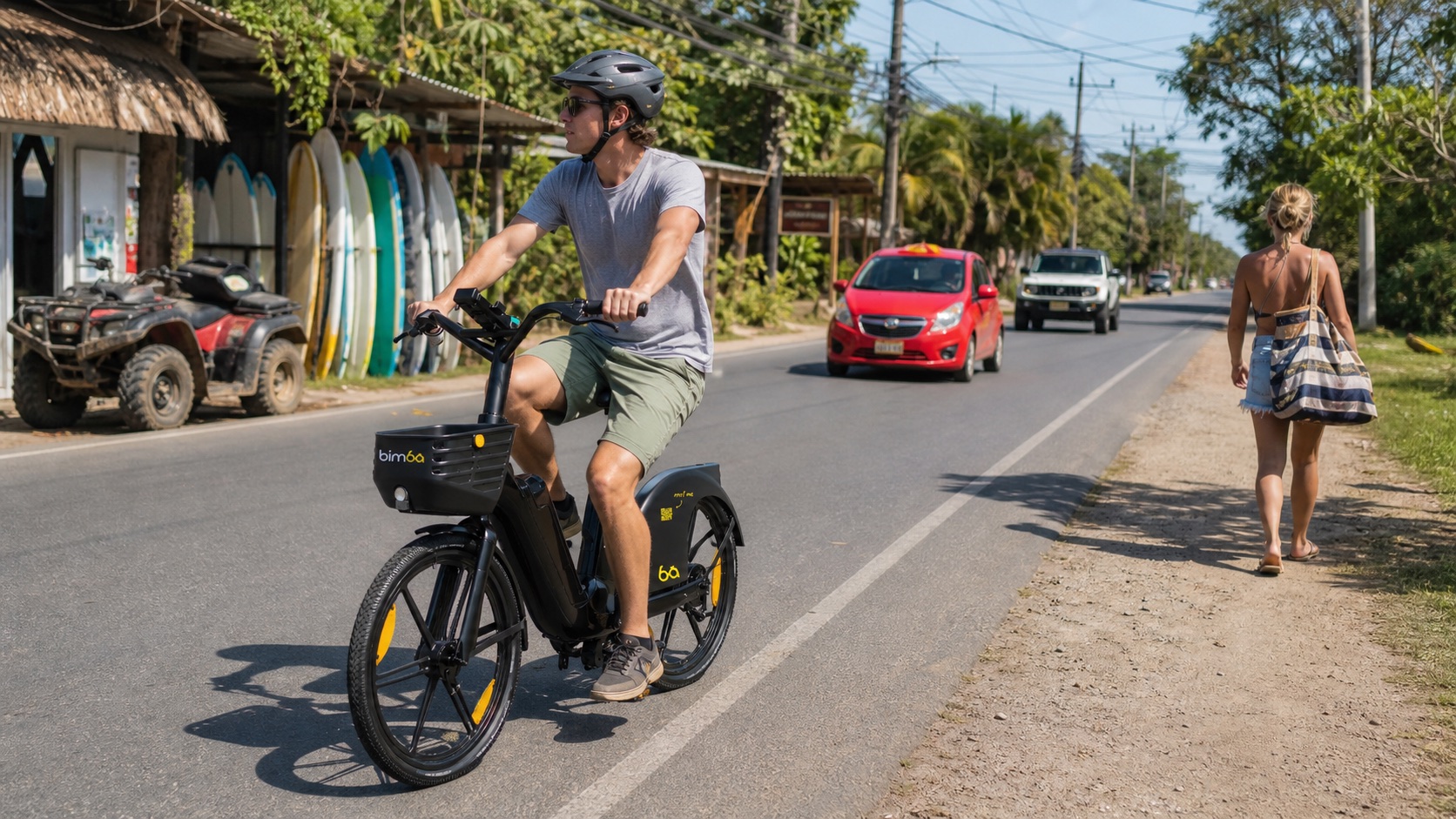
Getting around Santa Teresa, Costa Rica is easiest when you stop looking for one vehicle that solves every trip. The community stretches along a busy coastal road, while hotels and villas can sit above it on steep, loose or muddy side roads. A five-minute map pin can therefore mean an easy walk, a demanding climb or an unsuitable night ride.
For most visitors, the practical plan is a mix: walk for genuinely short daylight trips, use an available Bimba e-bike or e-scooter when the route and weather are suitable, and book a taxi for darkness, rain, luggage or alcohol. Rent an ATV or car only when your accommodation access, passengers, equipment or day-trip plans justify the extra cost and responsibility.
Bimba publishes this guide and operates shared electric vehicles in Santa Teresa. That gives us direct local experience—and a commercial interest we should state clearly. The comparisons below identify when Bimba fits and when a taxi, conventional bicycle, ATV, car, bus or shuttle is the better choice. Prices were checked on August 6, 2026 and should be confirmed again before paying.
Quick Decision: What Is the Best Way to Get Around Santa Teresa?
The best option depends on the trip, not the traveler label. A couple staying near the main road may walk to breakfast, use Bimba for an appropriate daytime ride and take a taxi after dinner. The same couple may need a 4×4 or suitable ATV if their villa is reached by a steep unpaved road.
Start with five questions: What are the exact start and end pins? Is the route steep or rough? Will you travel in daylight and dry weather? Are you carrying people, luggage or surfboards? How will you return if conditions change? If any answer makes a two-wheel trip doubtful, choose a taxi or enclosed vehicle.
| Trip | Usually practical | Why | Main reason to switch |
|---|---|---|---|
| Short, flatter daylight trip | Walk or available Bimba vehicle | Flexible and easy to park | Heat, rain, unsafe surface or no live availability |
| Dinner or nightlife | Pre-booked taxi | No riding after alcohol; safer after dark | Confirm the return before leaving |
| Hilltop or rough-road villa | Suitable 4×4, ATV or confirmed taxi | Access and traction matter | Vehicle type and driver/rider ability |
| Family, luggage or several boards | Taxi, shuttle or car | Capacity and weather protection | Confirm seats and cargo before pickup |
| Independent peninsula day trip | Rental car or suitable ATV | Range and schedule control | Insurance, road and return conditions |
| Airport or ferry connection | Reserved transfer or suitable rental car | Timing and luggage certainty | Do not depend on spontaneous availability |
Why Santa Teresa Feels Longer Than It Looks
Santa Teresa is not a compact grid with continuous sidewalks. Playa Carmen, central Santa Teresa, the northern beach areas, Mal País and Playa Hermosa are linked by a coastal corridor and side roads that vary in surface and elevation. Search results often compress all of this into one destination label.
Straight-line distance hides the final approach. A property described as “five minutes from the beach” may mean five minutes by ATV, not five minutes on foot with groceries. Ask the host for the exact entrance pin, a current photo or video of the access road and an honest description of the climb. Verify whether an ordinary sedan reaches the door in rainy season.
Traffic also changes the experience. Pedestrians, dogs, bicycles, electric vehicles, motorcycles, ATVs, taxis, delivery trucks and cars share space. Dust and potholes matter in the dry season; rain can add mud, standing water and low visibility. Leave margin instead of planning every journey from the fastest time shown by a map.
- Save the actual gate pin, not only the accommodation name.
- Check elevation and road surface as well as distance.
- Ask whether pickup happens at the door or on the main road.
- Test unfamiliar routes in daylight before relying on them at night.
- Keep a confirmed fallback for time-critical journeys.
Current Santa Teresa Transportation Prices
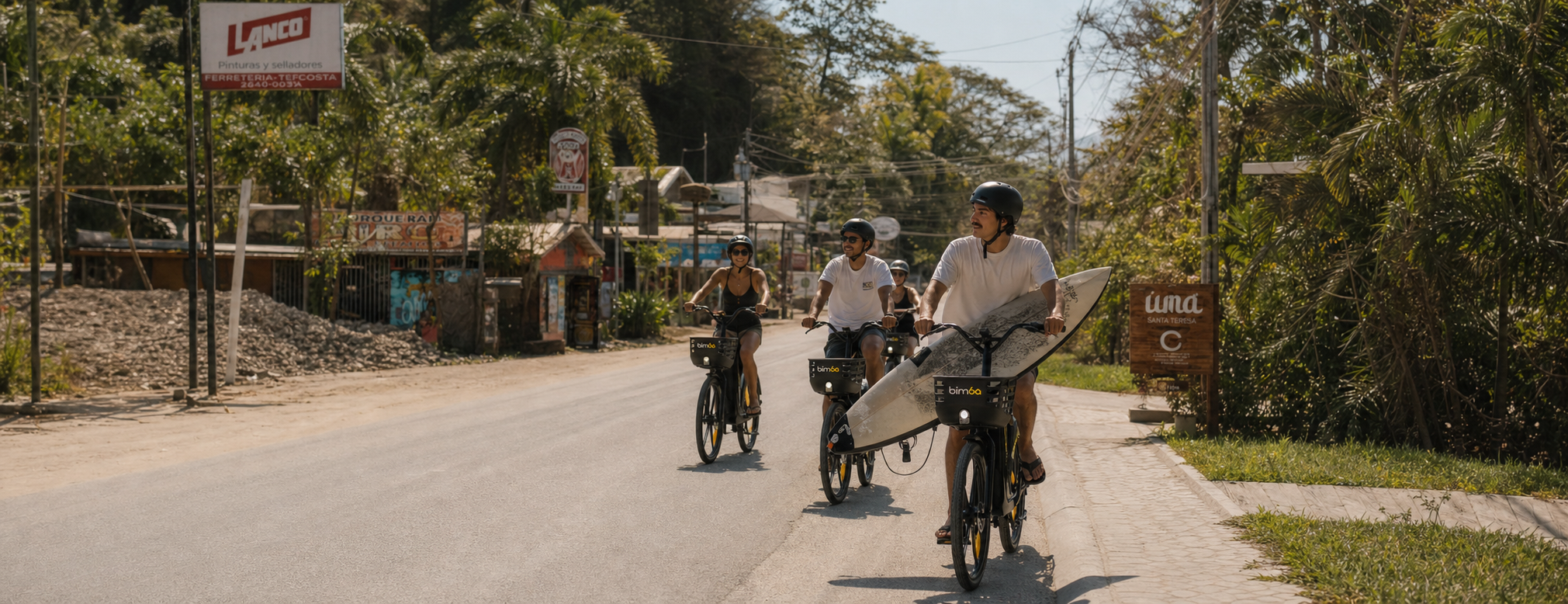
Price check: August 6, 2026. These figures are documented examples, not a universal tariff. Bimba's current standard price is US$1 to unlock plus US$0.50 per minute, or a US$15 daily pass with 100 included minutes. The app remains the final checkout source. Rental operators can change rates by season, model and inventory, while a taxi quote depends on distance, waiting and the exact access road.
Costa Rica's regulator, ARESEP, publishes maximum meter tariffs for authorized red taxis. Rates effective July 1, 2026 list ₡840 for the first kilometer and ₡840 for each additional kilometer for a regular sedan, with a ₡3,520 hourly delay rate; the published rural-taxi rate is ₡930 per kilometer. A driver may agree to charge less, and private tourist transfers may use a quoted total rather than that meter structure.
For conventional bicycles, ATValerios publishes a cruiser at US$12 plus tax per 24 hours and a mountain bike at US$20 plus tax. Its July–August 2026 listings show some ATVs from US$70 plus tax per 24 hours, depending on model. The headline number is not the complete cost: deposits, insurance or theft protection, fuel, delivery, damage liability and unused days can outweigh a small rate difference.
| Option | Verified planning reference | Extra cost or commitment | Best use |
|---|---|---|---|
| Walking | No rental cost | Time, heat, rain and limited pedestrian space | Very short familiar daylight trips |
| Bimba pay as you go | US$1 unlock + US$0.50/minute | Account, session, service-area and parking rules | One or more short local rides |
| Bimba daily pass | US$15 with 100 included minutes | Included minutes are not unlimited time; app terms apply | A day with repeated suitable rides |
| Conventional cruiser | US$12 + tax / 24h at ATValerios | US$100 card deposit in cited listing; pickup required | Repeated flatter daylight trips |
| Mountain bike | US$20 + tax / 24h at ATValerios | US$250–300 card deposit in cited listing | Exercise or planned rougher-road riding |
| Licensed red taxi | ₡840 first km + ₡840/additional km; rural taxi ₡930/km | Waiting and exact pickup affect total | Night, rain, luggage and one-way rides |
| ATV | Examples from US$70 + tax / 24h for July–August 2026 | Deposit, fuel, insurance terms and exposure | Suitable rough access and independent longer trips |
| Rental car or 4×4 | Live quote required | Insurance, deposit, fuel and parking | Families, luggage and peninsula day trips |
| Local bus | Confirm current fare and timetable | Fixed stops, schedule and luggage limits | Flexible budget travel |
Walking: Useful, but Only at the Right Scale
Walking works when your accommodation, food and beach access are genuinely close. It is often the simplest answer for a morning coffee or one nearby sunset. It is not automatically the best answer merely because the map shows one or two kilometers.
Midday heat, dust, rain and uneven shoulders can turn an ordinary urban walk into an uncomfortable trip. Some stretches have limited pedestrian infrastructure, and dark clothing is difficult for drivers to see after sunset. Choose a route that keeps you out of traffic and do not walk while distracted by navigation.
A walkable stay begins with accommodation choice. Place the pins for your room, preferred beach, groceries and likely evening venues on one map before booking. If most routine needs cluster nearby, you may avoid a full-week vehicle rental. If every meal requires crossing town, the cheap room may create a daily transport bill.
- Use walking for short, familiar and visible routes.
- Carry water and sun protection during the day.
- Use a light or reflective detail when visibility is reduced.
- Do not accept an unsafe roadside walk because a ride is delayed.
- Plan a taxi home before an evening involving alcohol.
Bimba E-Bikes and E-Scooters for Suitable Short Trips
A shared Bimba vehicle can fit trips along the active service area when a vehicle is available, the rider is confident and the route and weather are suitable. The app is the current source for vehicle location, pricing, operating rules, service boundaries and approved parking. A vehicle shown earlier in the day is not a reservation for later.
Shared mobility differs from a daily rental. You do not keep one vehicle outside your accommodation for the week; you begin and end each session according to the live service rules. That can remove storage and full-day commitment, but it also means availability must never be assumed for a flight, medical appointment or other time-critical trip.
Pedal assistance reduces effort; it does not flatten potholes, improve visibility or make a steep muddy access road safe. Inspect the vehicle, wear the provided or appropriate helmet, keep both hands available and slow before loose gravel or standing water. Use a taxi when rain, darkness, luggage, alcohol or rider confidence changes the decision.
| Bimba fits when… | Choose something else when… |
|---|---|
| The trip is short and within the live service area | The destination or return point is outside approved operation |
| Weather, visibility and road surface are suitable | Heavy rain, darkness or poor surface reduces control |
| The rider is confident and the load is small | You have children, large luggage, boards or accessibility needs |
| Live availability aligns with a flexible plan | A missed pickup would affect a flight or reservation |
| You can finish at an approved location | You need door-to-door access on a steep side road |
How Much Does Bimba Cost?
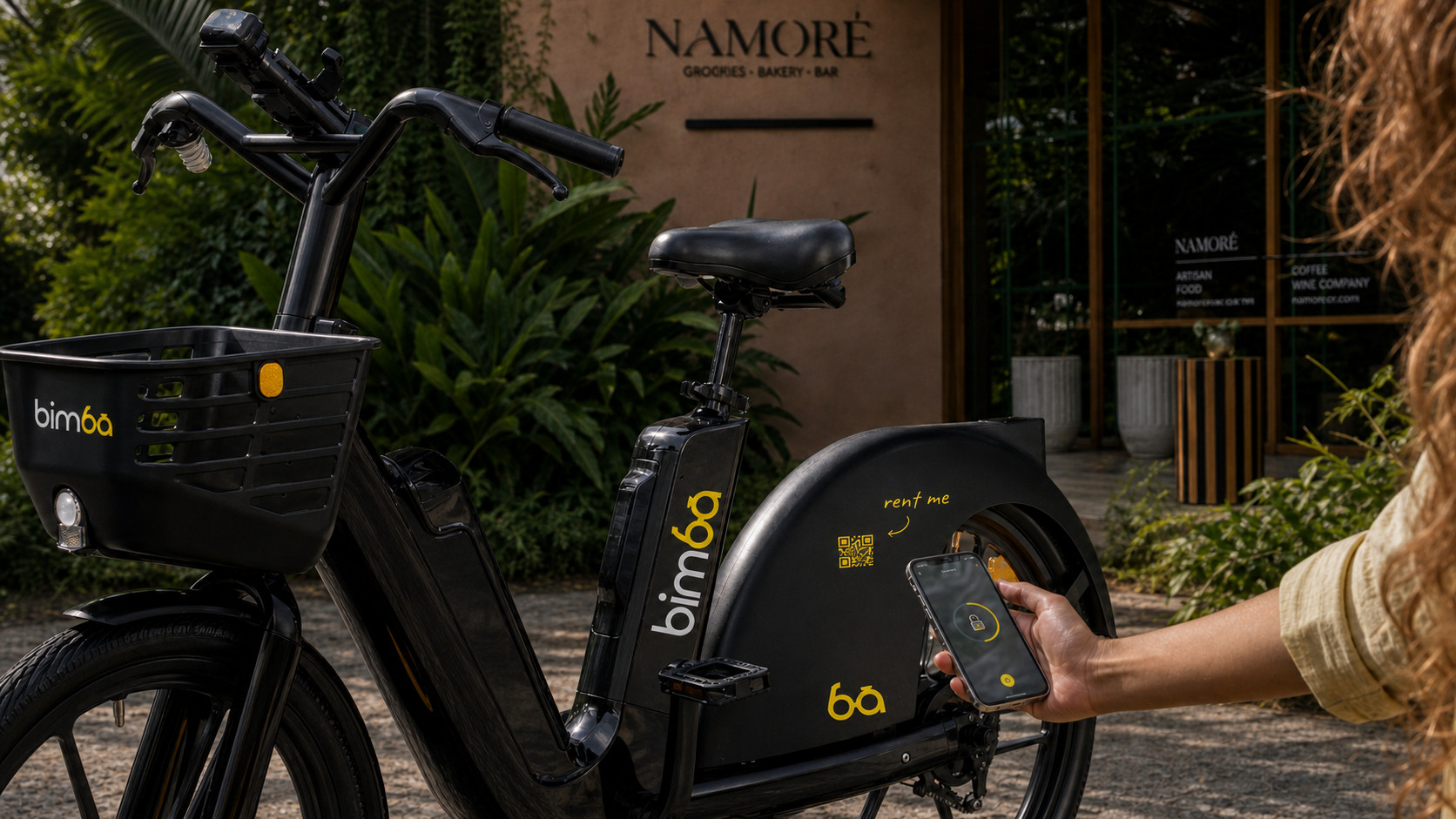
The standard pay-as-you-go rate is US$1 to unlock plus US$0.50 per minute. A 5-minute ride therefore costs US$3.50, 10 minutes costs US$6, 20 minutes costs US$11 and 30 minutes costs US$16. These examples assume one unlock and continuous billed ride time.
The US$15 daily pass includes 100 minutes. It is a minutes allowance, not a promise of unlimited riding, unlimited vehicles or guaranteed availability. Review the pass screen for its active period, unlock treatment, overage rules and any account-specific conditions before purchasing.
For one continuous pay-as-you-go ride, US$15 is reached at 28 minutes: US$1 unlock plus 28 × US$0.50. Repeated short rides can reach the same amount sooner because each separate pay-as-you-go session has its own unlock charge. The daily pass can therefore provide better value when you expect several suitable trips, but only use it when the routes, weather and approved parking also fit.
| Bimba option or example | Calculation | Price |
|---|---|---|
| Pay as you go | US$1 unlock + US$0.50 per minute | Depends on ride duration |
| 5-minute ride | US$1 + 5 × US$0.50 | US$3.50 |
| 10-minute ride | US$1 + 10 × US$0.50 | US$6 |
| 20-minute ride | US$1 + 20 × US$0.50 | US$11 |
| 30-minute ride | US$1 + 30 × US$0.50 | US$16 |
| Daily pass | 100 included minutes | US$15 |
Taxis: The Practical Gap-Filler
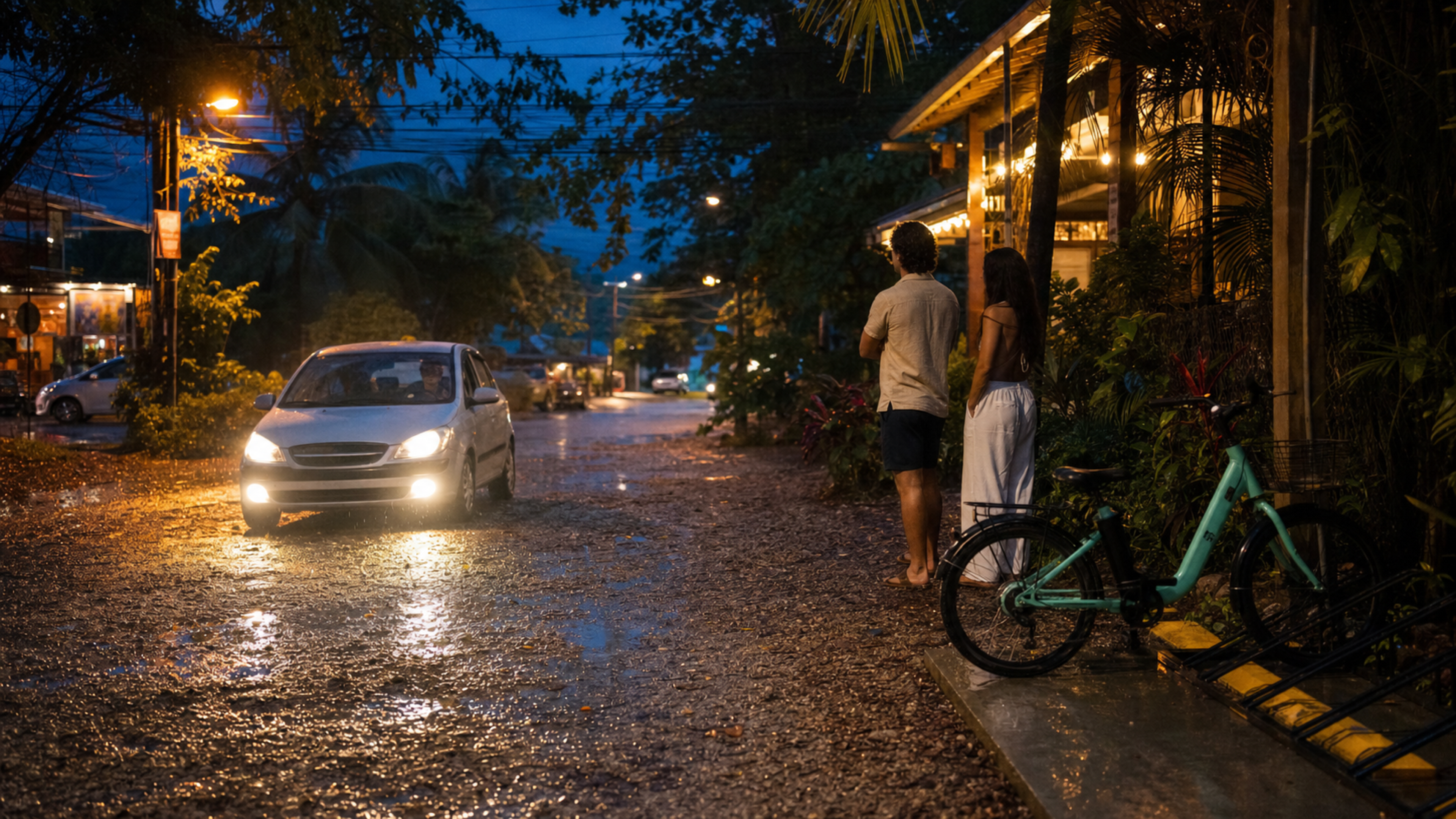
A taxi is often the right answer for dinner, rain, luggage, passengers, a one-way route or a journey you should not ride. Santa Teresa taxis work best when arranged directly: send both pins, request the total or meter basis, confirm the payment method and tell the driver about every passenger, suitcase and surfboard.
Availability is not identical at every hour. Pre-book airport transfers, early departures and late-night returns, then reconfirm close to travel. Save a second contact for a flight or ferry connection. If the accommodation road is difficult, ask whether pickup is at the door or a safe meeting point on the main road.
There is no Uber service in Santa Teresa. A route or estimate appearing in an app is not evidence of a local driver network. Read the dedicated Uber in Santa Teresa guide for the direct answer, and use the taxi price and booking guide for route examples and current fare evidence.
- Send exact pickup and destination pins.
- Agree on fare basis, currency and payment method.
- Declare boards, luggage, children and mobility needs.
- Confirm the driver's name, vehicle and time.
- Wait in a lit, staffed place after dark.
- Never replace a delayed taxi with riding after drinking.
ATV Rental: When the Capability Is Worth It
An ATV can make sense for repeated rough-road access, steeper routes and independent travel that genuinely benefits from clearance and traction. It is not a requirement for every Santa Teresa visitor, and it is not automatically safer because it has four wheels.
Compare the complete agreement: accepted licence, minimum age, deposit, damage liability, theft terms, fuel policy, passenger approval, helmet, delivery and breakdown support. Photograph the vehicle at handoff and ask the operator to demonstrate controls. A low daily rate is poor value if the vehicle sits parked or the rider is uncomfortable.
ATVs remain open to rain, dust and road debris. They add noise, take parking space and require sober, defensive operation. For one short corridor trip, walking, a suitable shared vehicle or a taxi may be simpler. For current models and deeper cost analysis, use the Santa Teresa ATV rental comparison.
| ATV question | Confirm before paying |
|---|---|
| Does the route require it? | Exact access road, distance and rainy-season condition |
| Can you legally and confidently operate it? | Licence, age, experience and passenger rules |
| What is the complete price? | Tax, deposit, fuel, delivery, protection and unused-day policy |
| What happens after failure? | Repair, recovery, replacement and emergency contact |
| Where will it stay? | Secure permitted parking at accommodation and destinations |
Rental Car or 4×4: Best for Capacity and Reach
A car becomes more valuable for families, multiple passengers, luggage, rain protection and independent day trips beyond Santa Teresa. A suitable 4×4 or higher-clearance vehicle may be necessary for a specific accommodation road, but central visitors should not assume they need one for every day of the stay.
Compare the total, not the online base rate. Costa Rica car-rental quotes can change with required insurance choices, optional coverage, deposits, extra drivers, child seats, delivery and fuel. Read the final terms and inspect the vehicle before signing. Ask the host whether an ordinary car can reach the property during your travel dates.
Parking and traffic are part of the cost. A car used only for breakfast, beach and dinner may spend most of the trip parked. A practical compromise is to arrive by shuttle or rental car, return or park it when appropriate, and use a mix of walking, Bimba and taxis for shorter local trips. Compare the tradeoffs in our e-bike versus rental-car guide.
- Choose a car for people, luggage, weather protection and range.
- Verify final-road clearance with the accommodation.
- Read insurance and deposit terms before entering payment details.
- Avoid an unfamiliar first drive after dark when possible.
- Never leave valuables visible in a parked vehicle.
Conventional Bicycles and Mountain Bikes
A conventional cruiser can suit repeated shorter, flatter daylight rides when you have secure storage and are comfortable providing all the effort. A current local listing starts at US$12 plus tax per 24 hours. A mountain bike adds useful gears and rough-surface control for a planned recreational ride; one current listing starts at US$20 plus tax.
The correct comparison includes fit, brakes, lock, helmet, deposit and repair support. Test the bike before the rental clock starts and photograph existing damage. A cheap bicycle that cannot handle the access road or fit the rider is not a bargain.
This overview does not duplicate the full commercial research. Use where to rent a bicycle in Santa Teresa for verified conventional-bike prices and delivery comparisons, or the mountain-bike rental guide for equipment, route and recovery planning.
- Cruiser: shorter flatter leisure and transport trips.
- Mountain bike: exercise and planned rougher permitted roads.
- Shared e-bike: assisted short trips under live service rules.
- Taxi or car: luggage, children, rain, darkness or unsuitable access.
Local Buses, Shuttles and Day Trips
Local buses can support budget travel between Santa Teresa, Cóbano and other peninsula connections, but they are a scheduled network—not a door-to-door replacement for every local trip. Stops, fares and timetables can change. Check the current ICT bus itinerary, ask your accommodation to verify the correct stop and arrive with time.
A shared or private shuttle is designed for planned transfers rather than spontaneous café trips. It is often sensible for airports, ferry connections and groups with luggage. Confirm pickup instructions, passenger and baggage allowance, waiting policy and the final Santa Teresa access road.
Separate arrival from daily mobility. The best vehicle for crossing Costa Rica may be unnecessary once you are based near the beach. Our complete arrival guide compares SJO, Liberia, Cóbano Airport, ferry, shuttle, bus and rental-car routes without forcing those details into this local transport page.
| Service | Use it for | Do not assume |
|---|---|---|
| Local bus | Flexible budget travel on a published route | Door-to-door service or an unchanged timetable |
| Shared shuttle | Scheduled regional or airport transfer | A private departure time or unlimited baggage |
| Private shuttle | Group, luggage and confirmed door-to-door transfer | Every steep road is accessible by every vehicle |
| Tour transfer | Activity pickup included by the organizer | Return transport is included unless written |
Getting Around Without a Car
A car-free stay is realistic when the accommodation pin, beach, groceries and food options cluster near the main corridor. Build the plan before booking the room: one easy daily area, a shared vehicle when suitable and available, and taxis reserved for nights, rain or higher-capacity trips.
It becomes harder when the property is on a steep road, the group includes young children or mobility needs, you carry boards daily or you plan repeated independent day trips. In those cases, choosing the right accommodation or renting a suitable vehicle may cost less than solving every journey separately.
Do not confuse “no car” with “no backup.” Save two transport contacts, keep enough phone battery and confirm the last trip before the day becomes inflexible. A mixed plan is successful because it changes when conditions change.
| Stay pattern | Car-free outlook | Suggested mix |
|---|---|---|
| Central couple, light luggage | Often practical | Walk + Bimba when suitable + evening taxi |
| Solo traveler near routine activities | Often practical | Walk + shared mobility + planned taxi |
| Family with young children | Depends on exact pin | Taxi or suitable car; confirm child-seat needs |
| Daily surfer with boards | More difficult | Purpose-suitable vehicle or taxi with confirmed capacity |
| Hilltop villa | Often difficult | Suitable 4×4, ATV or door-access taxi plan |
| Frequent peninsula day trips | Usually inconvenient | Rental car, suitable ATV or booked tours |
A Day-by-Day Mixed Transport Plan
On arrival day, use the transfer chosen for your luggage and final road. Do not collect an unfamiliar two-wheel vehicle after a long flight merely to save one taxi. Once settled, walk the immediate area in daylight and identify safe pickup and approved parking points.
For routine days, group activities by area. Beach, breakfast and errands near the accommodation reduce repeated crossings. Use a shared vehicle only when live availability, weather and the return point all align. If dinner is farther away, reserve the return before leaving.
Rent a car or ATV for the specific days when capability or range creates value. Return it rather than paying for idle days if the agreement and itinerary allow. For a surf lesson, tour or wellness retreat, ask whether transport is already included before renting something additional.
- Arrival: confirmed transfer with luggage capacity.
- First daylight: learn the immediate area and access road.
- Routine days: group stops and use the lightest suitable option.
- Night or rain: taxi arranged before conditions deteriorate.
- Day trip: suitable rental vehicle or tour transport.
- Departure: reconfirm pickup, flight or ferry margin the day before.
Safety Rules That Change the Transport Decision
Safety is not a separate checklist added after choosing a vehicle; it can change the choice. Darkness, heavy rain, alcohol, unfamiliar controls, poor tires or a steep loose descent are reasons to switch modes, postpone or turn back.
Inspect any rental or shared vehicle before moving. Check brakes, tires, steering, lights and helmet fit. Keep a phone stored while riding, remain predictable and slow before hazards. Do not carry a passenger, child, suitcase or surfboard unless the vehicle and provider explicitly support it.
For a taxi or shuttle, confirm the driver and vehicle before entering and wear the available seat belt. For a rental car or ATV, understand the controls and agreement. Costa Rica's current traffic rules should be consulted through official sources when a legal detail matters; a travel article cannot replace the law or conditions on the road.
- Never ride or drive after drinking.
- Do not learn unfamiliar controls in traffic or darkness.
- Use lights and visible clothing when conditions require them.
- Reduce speed before dust, gravel, potholes and standing water.
- Keep children and cargo within approved capacity.
- Choose a safe waiting point if transport is delayed.
- Turn back when confidence or visibility drops.
Getting Around Santa Teresa FAQ
What is the best way to get around Santa Teresa?
For most visitors, it is a mix: walk for very short daylight trips, use an available Bimba vehicle for suitable local rides, and choose taxis, ATVs or cars when darkness, rain, hills, people or luggage require them.
How much does Bimba cost?
The standard rate is US$1 to unlock plus US$0.50 per minute. The US$15 daily pass includes 100 minutes. Review the current app screen before confirming because account terms and promotions can change.
Do I need a car in Santa Teresa?
Not necessarily. A central stay can work without one. A car becomes more useful for families, luggage, weather protection, difficult access roads and repeated day trips.
Is Santa Teresa walkable?
Parts are walkable when your routine is close together. Heat, dust, rain, darkness, elevation and limited pedestrian space make longer journeys less comfortable.
Is there Uber in Santa Teresa?
No. Do not plan any local or airport journey around Uber. Use a directly confirmed taxi or shuttle for important trips.
How much does a taxi cost?
ARESEP's July 2026 maximum regular-sedan meter tariff is ₡840 for the first kilometer and ₡840 for each additional kilometer. Exact local and transfer totals still depend on the route, waiting and service type.
How much is an ATV rental?
One local operator publishes July–August 2026 examples from US$70 plus tax per 24 hours for some ATV models. Confirm the model, total, deposit, fuel and liability before booking.
Can I use an e-bike or e-scooter everywhere?
No. Use only permitted roads and the active service area, follow live parking rules and change transport when weather, surface, load or rider ability makes the trip unsuitable.
Can I get around with surfboards?
Walking with a board may work near the break. For longer trips, confirm a purpose-built rack or a taxi or vehicle with sufficient capacity; never improvise unsafe carrying.
What is best after dark?
A pre-arranged taxi is normally the practical choice. Wait in a lit place and never switch to riding after alcohol.
How should I reach a hilltop villa?
Send the exact pin and road notes to the host or provider. Confirm whether a taxi reaches the door and whether a suitable 4×4 or ATV is required in current conditions.
The Local Recommendation
Choose accommodation before choosing transport. If most of the day sits within one easy area, avoid paying for capability you will not use. Walk the shortest trips, check Bimba for suitable assisted journeys and reserve taxis for nights, rain and loads.
Choose an ATV or car when the route, group or itinerary genuinely needs it—not because a generic Santa Teresa list calls one option “best.” Recheck the plan each day against weather, road surface, passengers, equipment and the return. The best transport is the one that completes the real trip safely with the least unnecessary friction.
For live Bimba vehicle availability, price, service boundaries and approved parking, use the official app. For a flight, ferry or fixed reservation, keep shared mobility out of the critical path and book the appropriate transfer directly.