Find
Open the live map to see current vehicles and approved Bimba locations. Availability moves with the fleet, so the app is more useful than an old screenshot or a remembered parking spot.

Connected mobility · Built for Santa Teresa
Bimba connects an app, shared electric bikes and scooters, a local parking network and an operations team into one practical service. The innovation is not technology for its own sake. It is removing friction from a short trip while keeping people, parking and local conditions in the loop.
The short answer
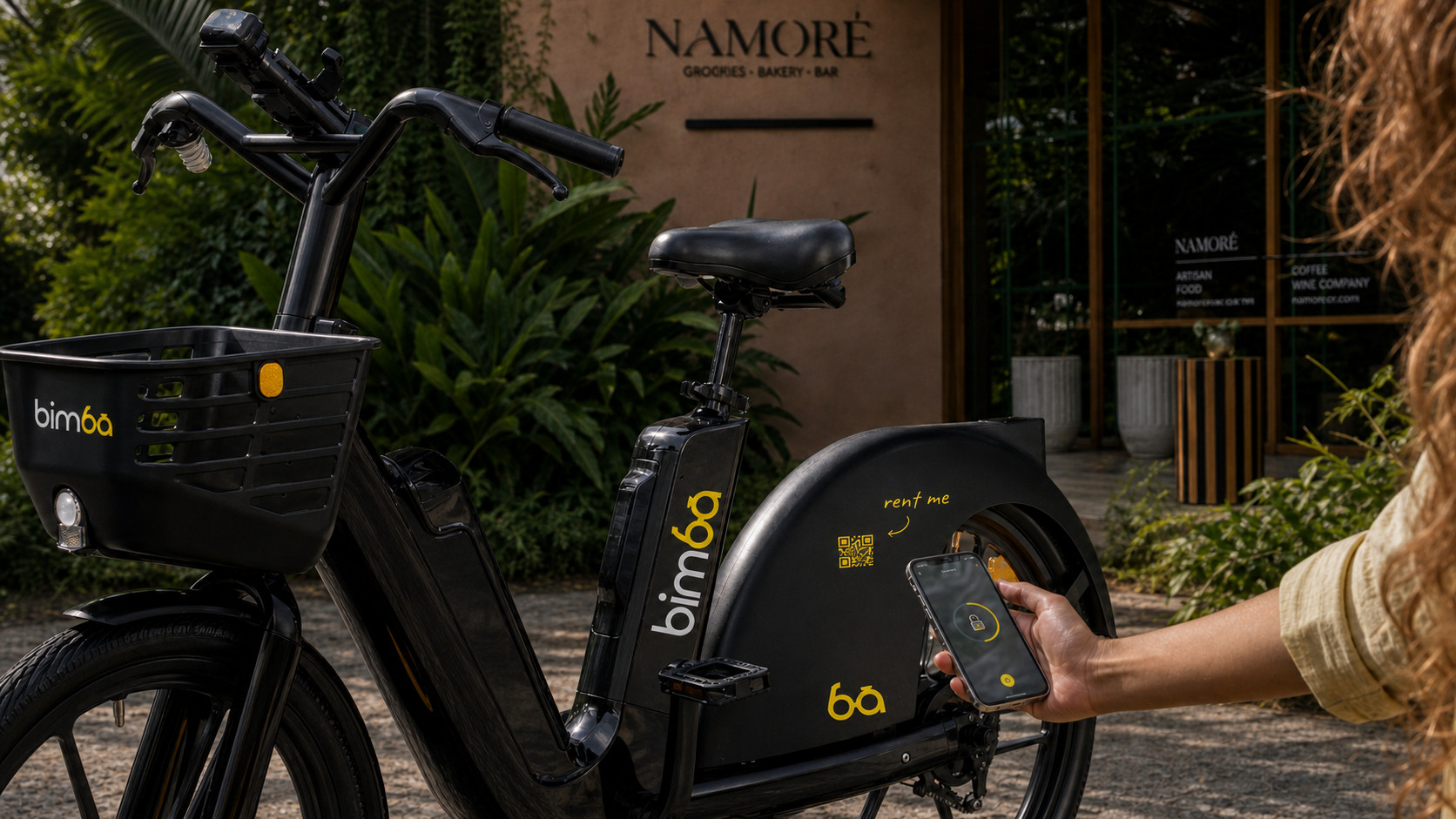
Bimba is an app-based shared electric mobility service in Santa Teresa, Costa Rica. The rider uses a phone to find an available e-bike or e-scooter, review the current ride details, scan the QR code and unlock. At the destination, the rider returns the vehicle to an approved location and confirms the end of the trip in the app.
Behind that simple flow is a connected system: vehicle identity, availability, payments, approved locations, physical docking equipment and local fleet work. Each part solves a different problem. The app reduces the need for a rental counter. The shared fleet allows one vehicle to serve many trips. Organized parking gives the ride a responsible ending. Local maintenance keeps the digital experience tied to the condition of a real vehicle.
One connected journey
Good mobility technology stays out of the way when everything works, but gives the rider clear information at every decision.
Open the live map to see current vehicles and approved Bimba locations. Availability moves with the fleet, so the app is more useful than an old screenshot or a remembered parking spot.
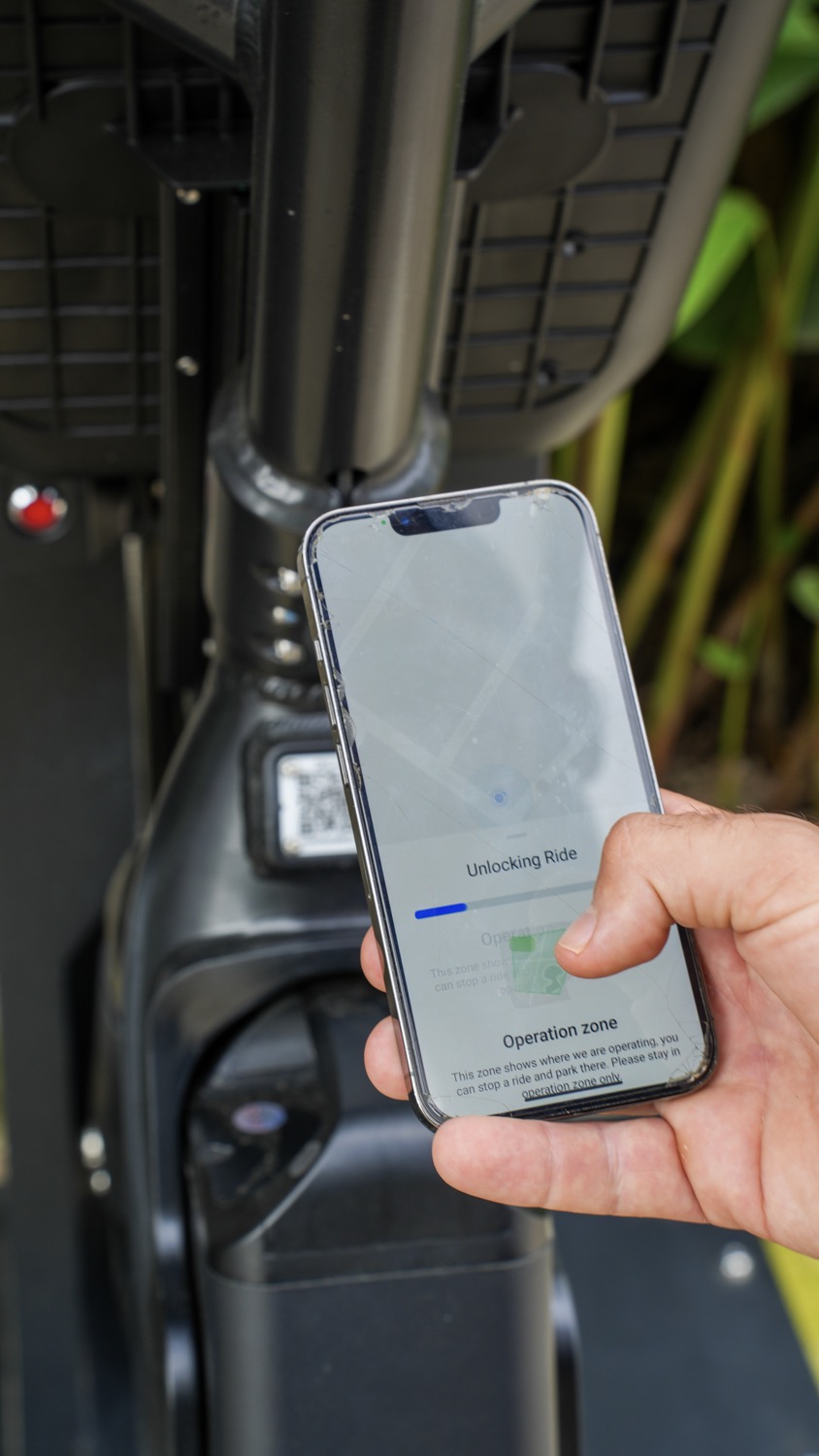
Each vehicle has its own QR code. Scanning connects the account, vehicle and ride without exchanging a key or waiting at a desk. The screen guides the next step.
The active trip remains connected to the rider's account. The phone holder can keep navigation visible when needed, but stop safely before touching the screen.
Go to a location shown in the app, park upright without blocking access and follow the current end-ride instructions. Confirm the app shows the trip as finished before leaving.
The Bimba app
A conventional rental usually begins with a storefront, paperwork, a key and fixed opening hours. Bimba moves the essential decisions into the phone. A visitor arriving early for surf or returning from dinner can check the network without first finding an office.
The app is where a rider sees current availability, starts the unlock flow, accesses wallet or payment options, checks the active ride and finds approved places to finish. It also provides a direct reference when something does not work normally. That does not mean every decision is automated: weather, road conditions, battery needs and personal ability still require human judgment.
For privacy and payment details, riders should use the official Bimba application and follow the terms presented there. Do not send card information through social media or to an unverified contact.
Download the official Bimba app ↗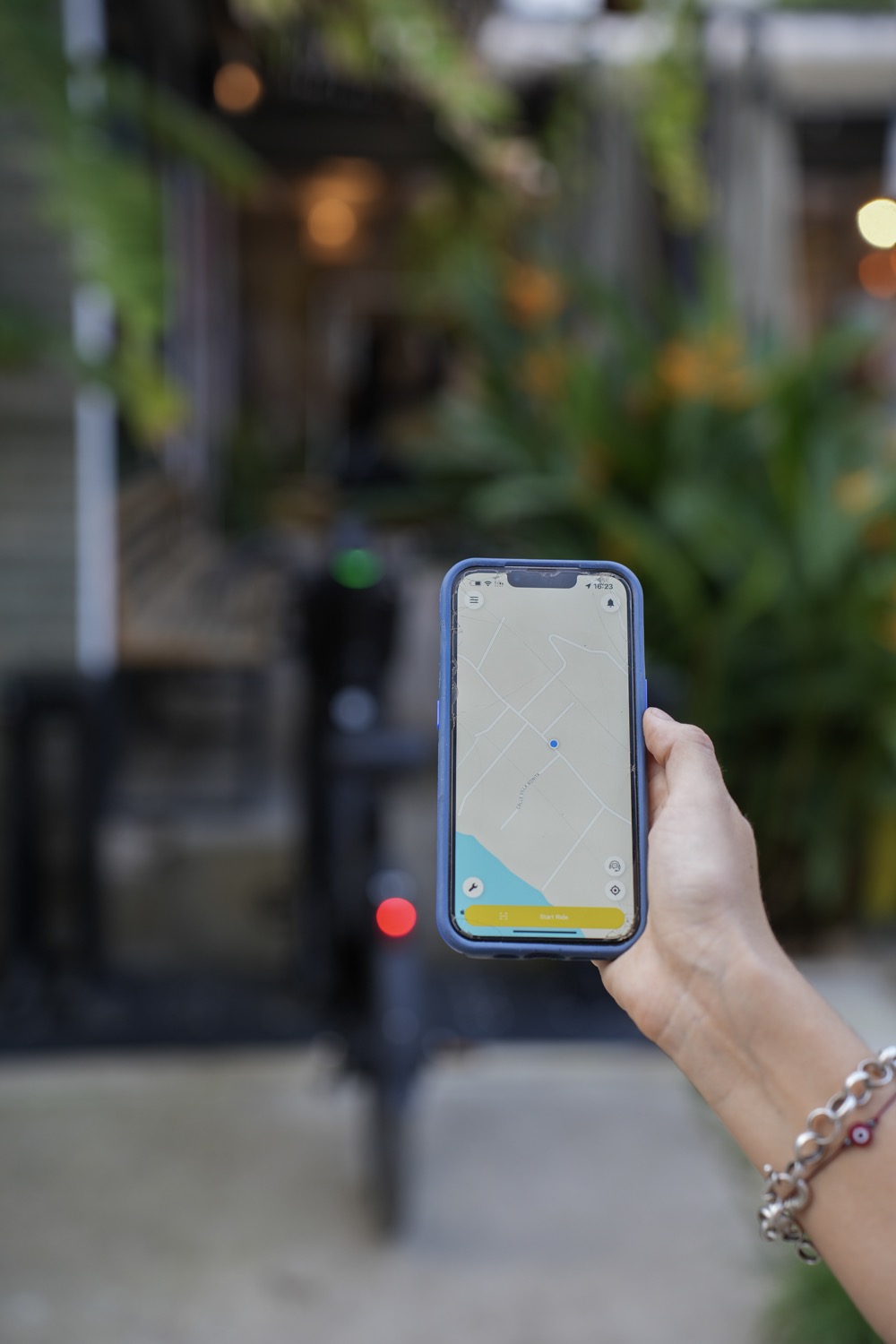
Purpose-built for shared use
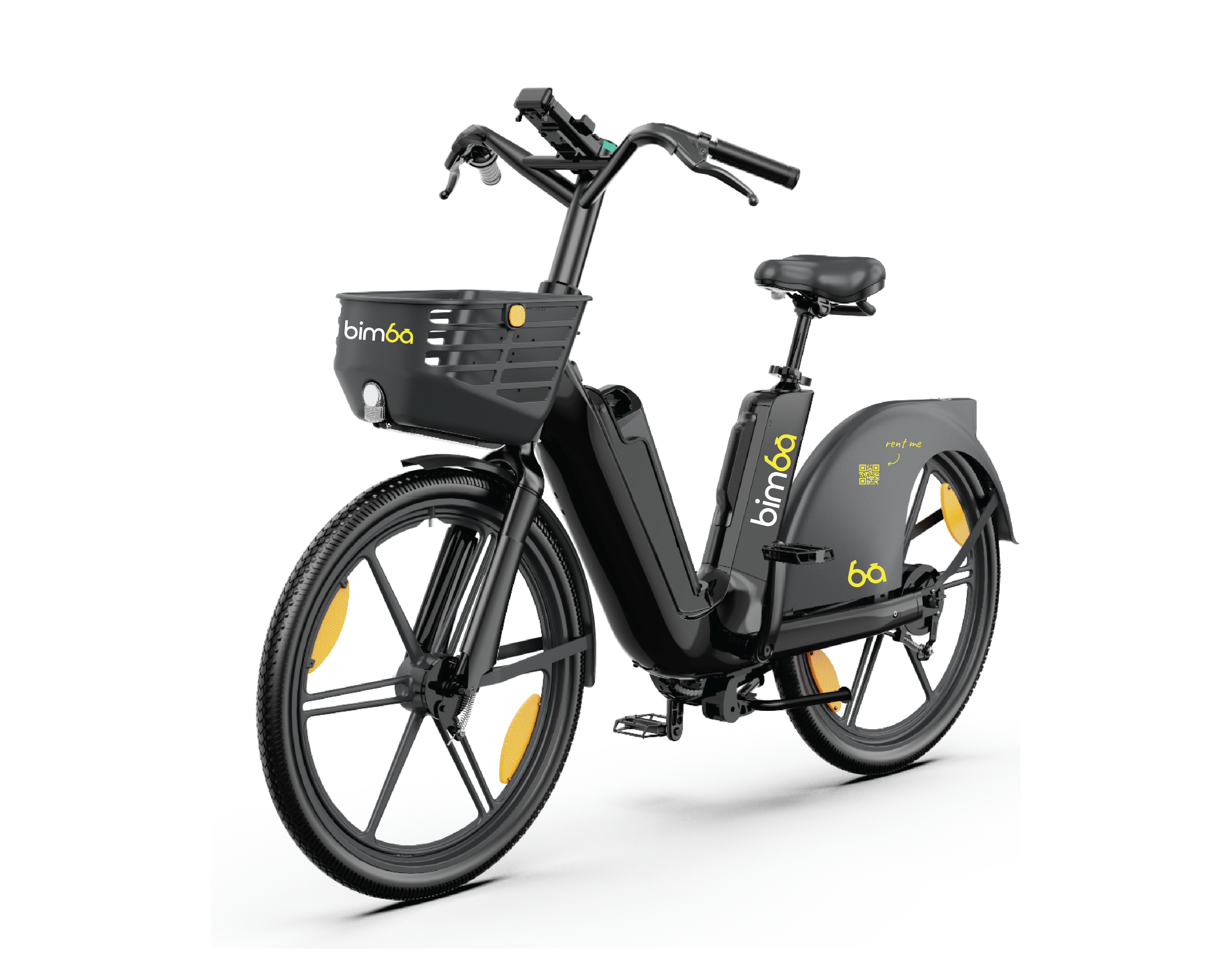
An app cannot compensate for a vehicle that is uncomfortable, confusing or poorly maintained. Bimba's shared e-bike brings the everyday ride into one recognizable product: a step-through frame, electric assistance, an integrated front basket, lights and reflectors, a phone holder and a visible QR code.
The low frame makes mounting more straightforward for many riders. The basket supports the kind of small local trips people actually make, groceries, a beach bag or a daypack, while keeping items away from the controls. Integrated branding helps riders identify the official fleet and match the vehicle in front of them with the app.
Technology does not remove the need for a pre-ride check. Before moving, squeeze the brakes while stationary, look at the tires and wheels and confirm the controls and lights respond normally. If anything feels wrong, leave that vehicle parked and report it rather than trying to repair it yourself.
Read the Bimba safety guide ↗Digital guidance, physical places
Bird's published innovation work repeatedly treats parking as part of the product, not an afterthought. That is the right principle for Santa Teresa too, even though Bimba uses its own system and does not claim Bird's visual parking or AI review features.
Bimba combines the app map with a local network of approved business parking points and physical docks. The map tells a rider where a trip can finish. The physical location gives the instruction a real-world destination. At selected stations, docking hardware provides an organized place to lock and charge compatible fleet vehicles.
This hybrid approach suits a long coastal town where useful destinations are spread between hotels, restaurants, banks, cafés, shops and beach access roads. It also lets the network grow with local partners instead of treating every open patch of ground as parking. Current locations and instructions can change, so the live app remains the source of truth.
Explore current parking locations ↗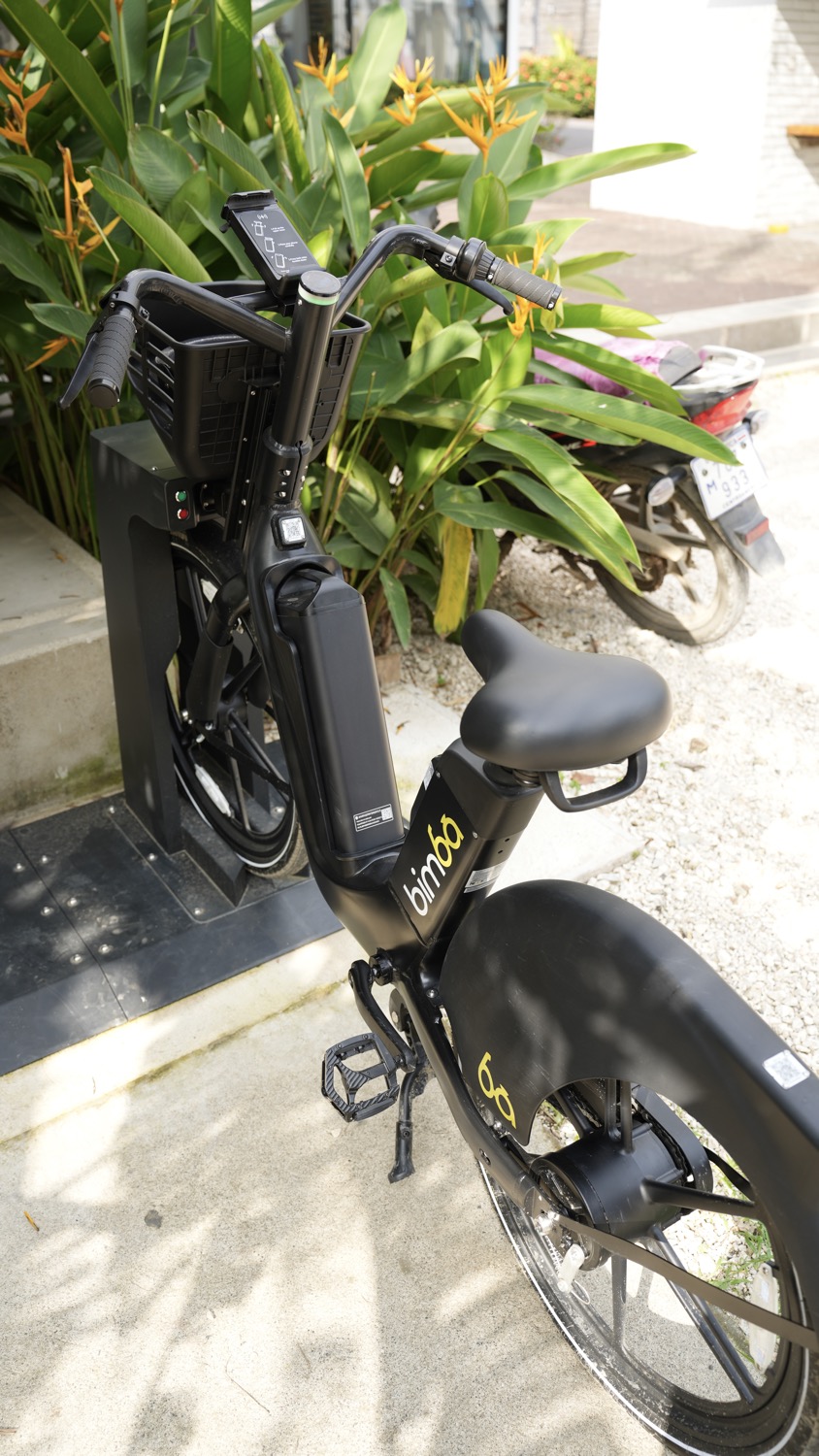
The intelligence behind the screen
A connected fleet can show where vehicles are available and help the team understand where attention is needed. But the useful decision is rarely as simple as moving a dot on a map. A road may be muddy after rain. A parking point may be busy at breakfast. A business entrance may need extra clearance. A vehicle may need a physical inspection before it returns to service.
That is why Bimba's technology is paired with local operations. People charge and inspect vehicles, handle maintenance, redistribute the fleet, answer rider questions and work with parking partners. Reports from riders and businesses add context that a dashboard cannot see on its own.
Innovation here means shortening the distance between a problem and a response. A clear vehicle number, accurate location and useful photo can help the team identify the right bike or scooter. A well-defined parking network can reduce ambiguity at the end of a trip. Better instructions can prevent the same support question from happening again.
Responsible by design
A feature should solve a rider, business or community problem. More screens and more automation are not automatically a better service.
Pricing, parking and end-of-ride status should be understandable at the moment a decision is made.
Santa Teresa's weather, roads, travel patterns and business network shape how the system should operate.
Software supports the ride; local teams remain responsible for fleet care, support and partner relationships.
No convenience feature replaces a helmet, a vehicle check, an appropriate speed or attention to the road.
Bimba will describe technology that exists in its service, and separate present capabilities from future ideas.
Technology questions
The app is the source for current vehicle availability, prices, locations and ride instructions. These answers explain the system without promising unverified features.
The Bimba app brings the main parts of a shared ride into one place. Riders can create an account, view available vehicles and approved locations, scan a vehicle's QR code, follow the active ride and confirm that the trip has ended. Current availability, pricing and instructions should always be checked in the app.
Open the Bimba app, select an available vehicle and scan its QR code. Follow the instructions shown on screen and wait for the app and vehicle to confirm the unlock before moving it. If the vehicle does not unlock normally, do not force it; choose another vehicle or contact support.
The app is the live source for vehicles and approved parking locations. Availability can change as other riders begin or finish trips, so refresh the map and confirm the vehicle in front of you before making plans around it.
Bimba combines physical docking locations with approved parking points at local businesses. That hybrid approach gives riders clear destinations while allowing the network to fit the shape of Santa Teresa. The app provides the current location and end-of-ride instructions.
No. Bird's published technology describes features specific to Bird. Bimba does not claim autonomous braking, sidewalk detection, AI parking review or any other feature unless it has been verified for the Bimba fleet. Riders remain responsible for checking the vehicle, controlling it and following local rules.
No. Software can connect a rider to a vehicle, but people inspect, charge, maintain and redistribute the fleet, support riders and work with parking partners. Bimba's service depends on both connected technology and local judgment.
Simple on the surface · Connected underneath
See the current network, choose the vehicle that fits and follow the app from unlock to approved parking.