Less exhaust where people live and walk.
Bimba e-bikes and e-scooters have no tailpipe. Replacing a short fuel-powered journey means one less vehicle releasing exhaust along the village road.

Electric mobility · Santa Teresa, Costa Rica
Santa Teresa's natural beauty is the reason so many of us are here. Bimba offers shared electric bikes and scooters for the short trips that keep the village moving, without adding another gas-powered car or ATV to the road.
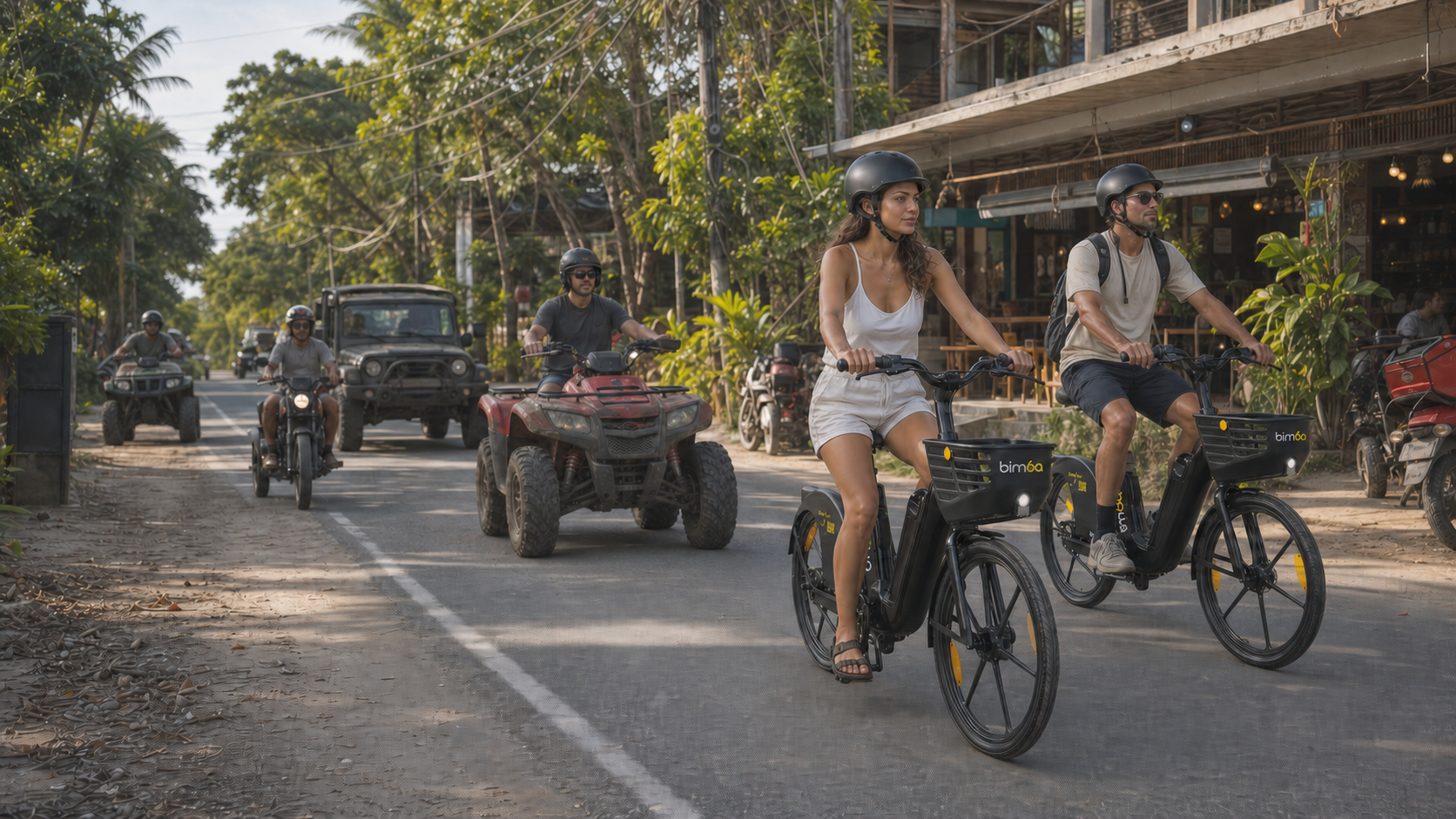
Bimba's eco-friendly approach
A Bimba e-bike or e-scooter has no exhaust while you ride. When it replaces a short journey by car, ATV, taxi or motorcycle, it also means one less fuel-powered vehicle making that trip through the village.
Sharing matters too. Instead of every visitor needing a private rental, the same Bimba can serve many riders throughout the day. We support that shared system with local maintenance, physical charging docks and approved parking points at businesses across Santa Teresa.
That does not make any vehicle impact-free. Bikes, batteries, charging and operations still use materials and energy. For us, being an eco-friendly mobility company means reducing what we can, taking care of the fleet and being honest about what remains.
The problems we are here to help solve
The road through Santa Teresa is shared by residents, visitors, workers and wildlife. Many everyday journeys are short, yet they are still made by car, ATV, taxi or motorcycle. When a Bimba replaces one of those fuel-powered trips, it can help reduce several pressures the village feels every day.
Bimba e-bikes and e-scooters have no tailpipe. Replacing a short fuel-powered journey means one less vehicle releasing exhaust along the village road.
Engines, accelerating motorcycles and ATVs are part of Santa Teresa's daily noise. Electric rides move without combustion-engine noise, helping short trips feel calmer for homes, businesses and visitors.
Using a Bimba instead of a car, motorcycle or ATV reduces fuel use for that journey and avoids its direct tailpipe CO₂ emissions. Charging and manufacturing still have an impact, so we do not call any ride carbon-free.
Santa Teresa depends on one busy coastal corridor. E-bikes and e-scooters cannot remove every traffic jam, but they can move one person without adding another car or ATV to the queue.
A shared vehicle can be picked up when needed and returned to an approved Bimba location. That reduces the need to keep a private rental parked outside beaches, cafés, hotels and shops all day.
No vehicle can eliminate road crashes. Bimba supports safer local mobility through maintained vehicles, rider guidance, approved parking and a practical alternative to larger, faster vehicles for suitable short trips.
Traffic on unpaved sections can add dust and wear. Choosing a lighter vehicle for a short journey can reduce the need to send another heavy car or ATV over those roads.
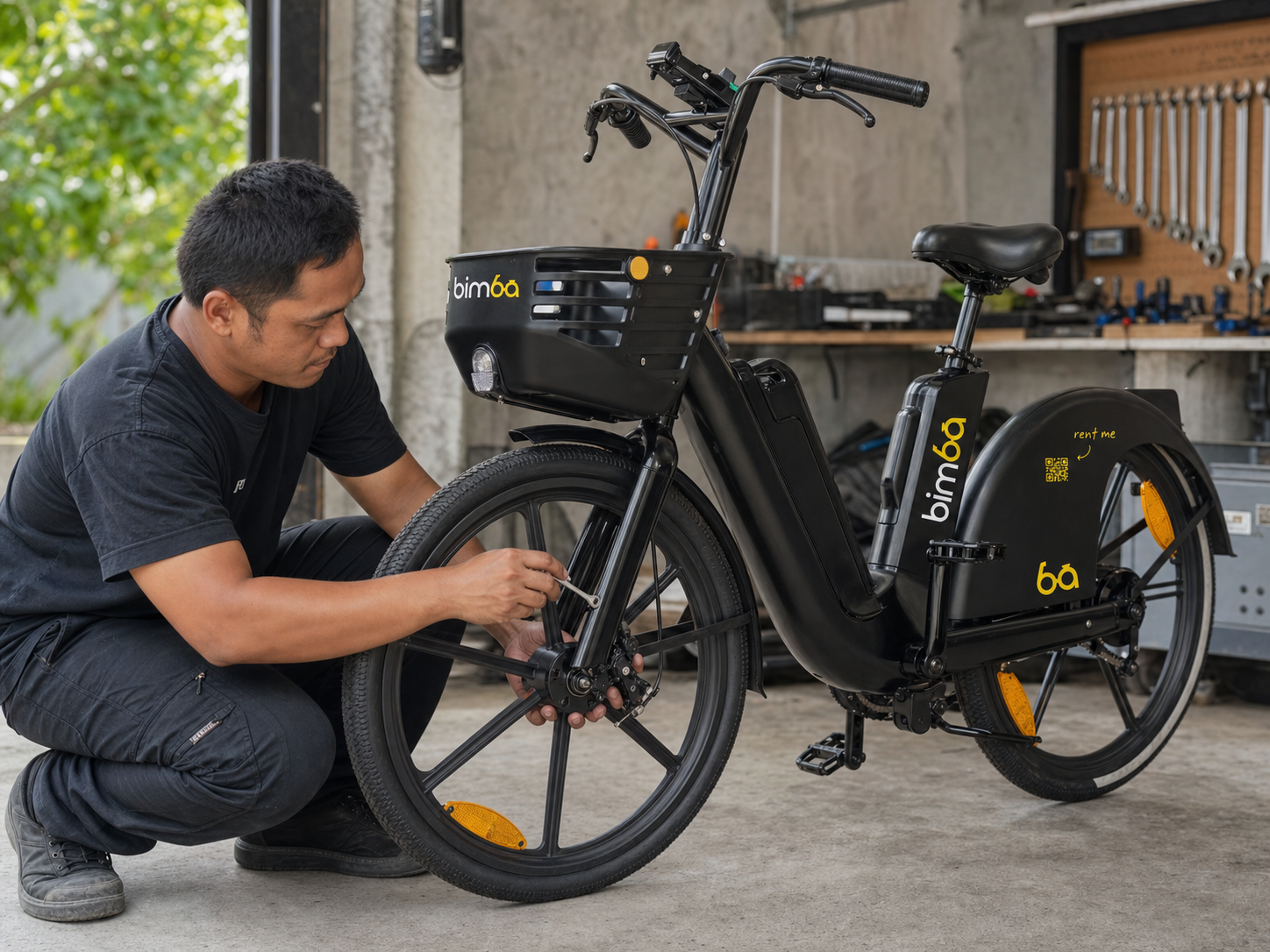
Care before replacement
Sustainability is not only about the electricity used during a ride. It also depends on how long the vehicle stays safe and useful. Regular inspections can catch worn brakes, damaged tires and loose parts before they become a larger problem.
When you report a problem instead of ignoring it, you help the operations team remove that vehicle from service and check it. That supports the next rider and makes better use of the equipment already in the fleet.
Report a vehicle problem ↗A network, not a pile of vehicles
Bimba uses physical charging and locking docks at selected locations around the village. When a compatible vehicle is guided fully into the dock, the station secures it and begins charging. This keeps the vehicle in a known place and prepares it for another rider.
There are also approved parking points at participating businesses without physical docking hardware. They give riders more useful places to end a trip while keeping vehicles connected to the local business network.
Physical docks currently identified by Bimba: Somos Hostel · Namoré · BAC Bank · Rico's · Liam's Place (near The Bakery). Always check the live app for current locations and availability.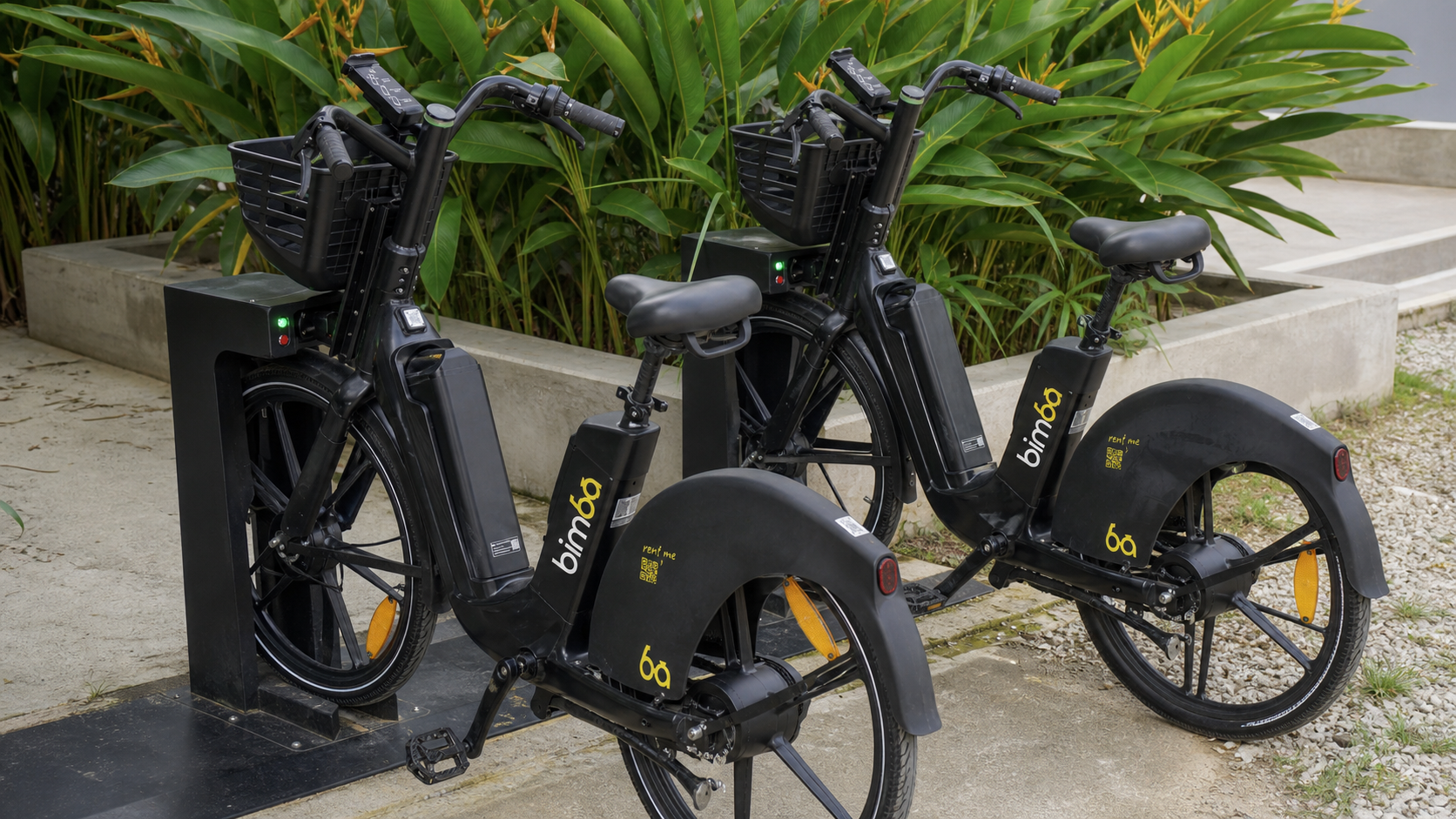
Part of a bigger Costa Rican story
Costa Rica built its international identity around forests, wildlife and responsible tourism. Keeping that promise now means looking beyond protected areas. Transport, water, waste and the pressure created by fast-growing destinations are part of the same environmental conversation.
The country's National Decarbonization Plan identifies sustainable mobility and electric transport as part of its long-term direction. Bimba brings that idea down to village scale: an electric option for the short distance between a hotel, home, beach, café or workplace.
This does not solve every ecological challenge in Santa Teresa. An e-bike cannot fix wastewater systems, plastic waste or unplanned development. What it can do is make some local trips possible without a gas-powered vehicle, and make lower-impact travel easier to choose in daily life.

Local conservation spotlight
The mantled howler monkey, known in Costa Rica as the mono congo, is one of the Nicoya Peninsula's most recognizable residents. It lives, feeds and moves through the forest canopy, which makes habitat loss and fragmented tree cover a direct threat to its survival.
Somos Congos is a nonprofit association based in Cóbano. Its documented projects include forest restoration, environmental education, wildlife rescue support, reducing primate electrocutions and helping restore biological corridors. The organization also raises awareness about the effects of excessive noise and artificial light on local wildlife.
We believe responsible mobility should respect the wider ecosystem around it. Quieter electric trips are only one piece of that picture; protecting tree cover, wildlife crossings and healthy habitat requires dedicated conservation work from organizations and the community.
Bimba and Somos Congos do not currently have a formal partnership. We are highlighting their independent local work because it is relevant to the future of the place we share.Learn about Somos Congos and support their work ↗The rider matters too
End your ride only at a current Bimba parking location shown on the live map.
Leave room for pedestrians, wheelchairs, doors, driveways and other road users.
If something looks wrong, tell Bimba support so the vehicle can be checked before its next trip.
Eco-friendly, with evidence
Bimba is building an eco-friendly transportation service around shared electric vehicles, local care and organized parking. We are proud of that direction, but we will not call every ride carbon neutral or attach a precise emissions saving without a complete, independently reviewed assessment.
The next step is to publish more of the numbers behind the network: charging electricity, operations mileage, vehicle and battery life, repairs, recovered parts and the types of trips riders replace. Those figures would make it possible to judge progress with evidence rather than a slogan.
For now, our promise is practical: make sustainable transportation in Santa Teresa easier to choose, keep the vehicles useful for longer and be transparent about the work still ahead.
Sustainability questions
The Bimba app remains the source of truth for the current service area, available vehicles and approved parking.
Not automatically. The clearest benefit comes when a Bimba replaces a short trip that would otherwise be made by car, ATV, taxi or motorcycle. Walking is still the simplest option for a short distance, and shared transport may be better for a group.
They do not produce exhaust while being ridden, but every vehicle still has an environmental footprint from manufacturing, electricity, maintenance and transport. Bimba does not describe a ride as impact-free.
A vehicle that is inspected, repaired and kept in service makes better use of the materials already built into it. Maintenance also supports safety and reliable availability for the next rider.
Bimba currently identifies physical docks at Somos Hostel, Namoré, BAC Bank, Rico's, Liam's Place (near The Bakery). Check the live app before every trip because locations and availability can change.
Yes, when that business appears as an approved parking point in the Bimba app. Follow the in-app instructions and leave entrances, paths and driveways clear.
Eco-friendly travel starts with one useful choice
Choose a Bimba when it can replace a gas-powered ride, then park responsibly so the next person can do the same.