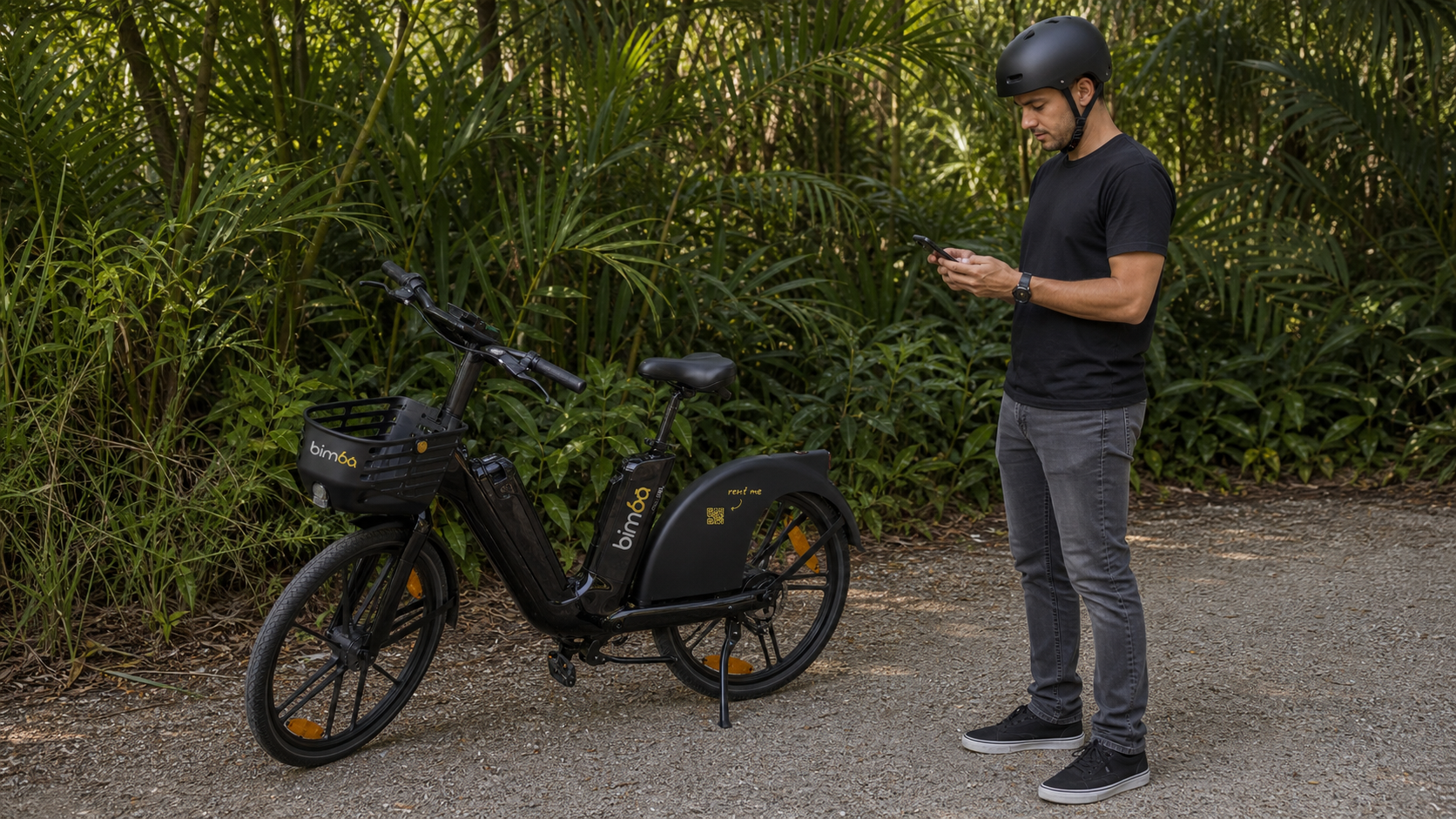
Check that you can ride
Bimba is for riders aged 18 or over who meet the current account and identity requirements in the app.

Bimba rider safety
Safe riding in Santa Teresa begins with the right vehicle, a quick check and an honest look at the road and weather. This guide covers practical safety for Bimba e-bikes and e-scooters. Always follow the current Rider Agreement and instructions in the Bimba app.
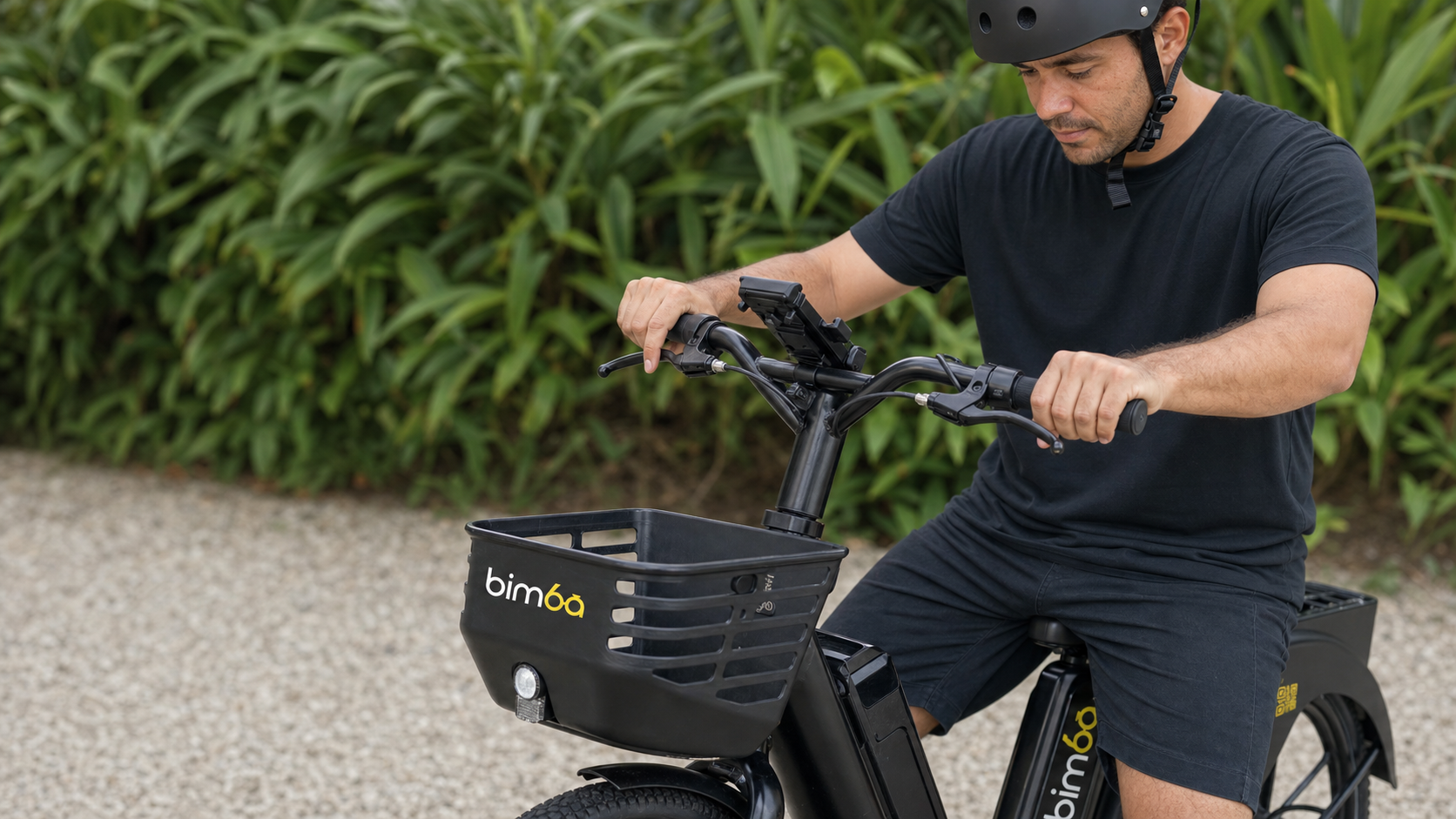
The short answer
Start with a helmet and a quick look over the bike or scooter. Squeeze the brakes, check the tires and make sure nothing feels loose or damaged. If something does not feel right, choose another Bimba. Take it slowly on sand, gravel and wet roads, and stop somewhere safe before checking your phone. When you finish, park at a location shown in the Bimba app and wait for the app to confirm that your ride has ended.
Rules that protect everyone
Bimba is for riders aged 18 or over who meet the current account and identity requirements in the app.
Each Bimba is built for one eligible rider. Carrying a passenger changes the balance, steering and stopping distance.
Wear a properly fitted, standards-compliant helmet. It should sit level, feel secure and remain fastened for the whole trip.
Do not ride after drinking alcohol, using drugs or taking anything that affects your attention, balance or reaction time.
Keep both hands available for steering and braking. Pull over safely before checking the map or contacting support.
Follow applicable Costa Rican traffic laws, signs and signals. Give pedestrians space and never assume another road user has seen you.
The 30-second vehicle check
A shared vehicle may have been used since the last operations check. Look, test and decide before entering traffic.
Squeeze both levers and gently move the vehicle. Braking should feel firm and predictable.
Look for low tires, visible wheel damage or anything rubbing as the wheel moves.
Check for loose or damaged parts. Make sure the handlebars, accelerator where fitted, and other controls respond normally.
Confirm the lights work, adjust the e-bike seat while stopped and check the app’s battery information for your planned trip.
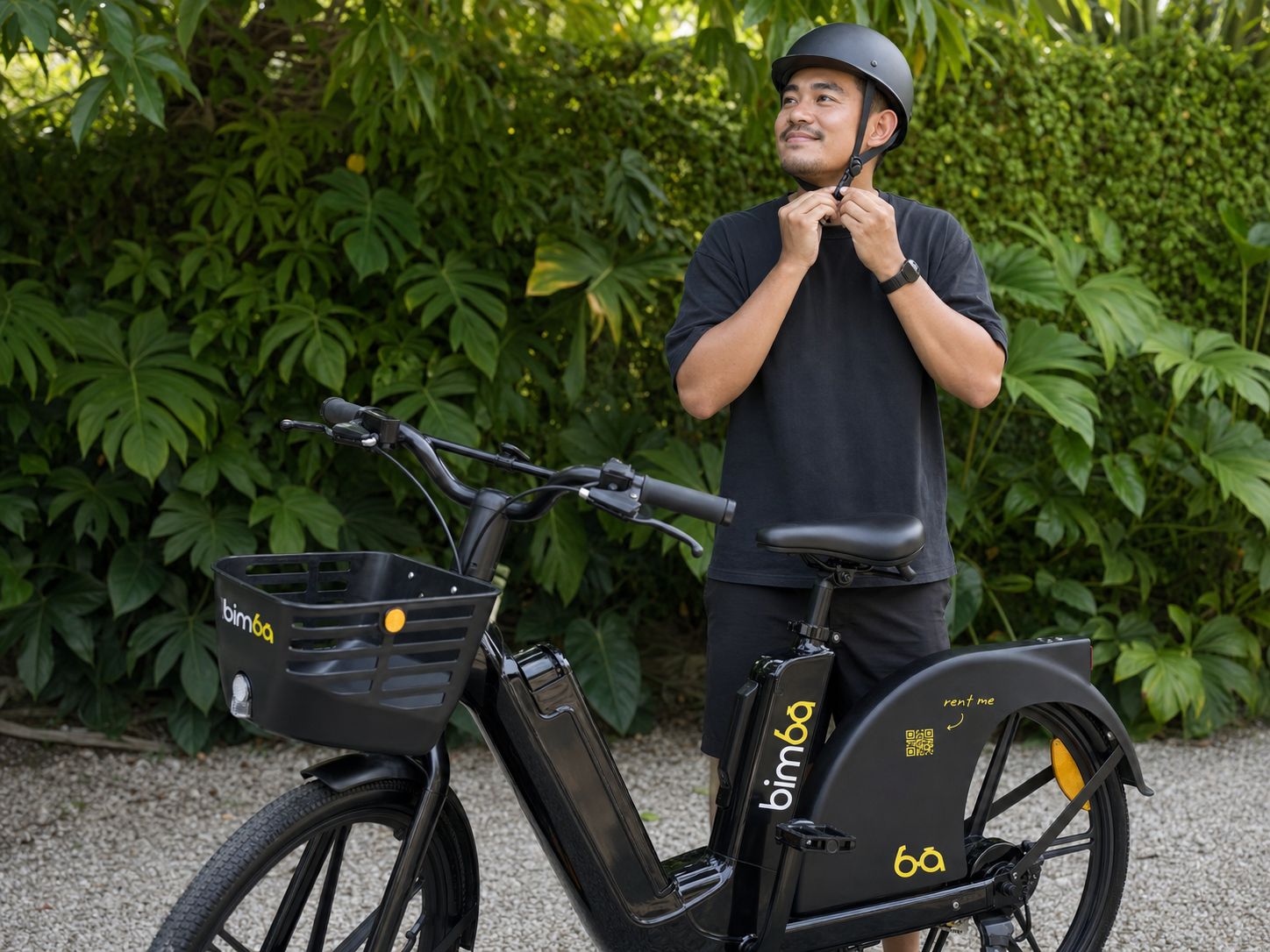
Before every trip
Put your helmet on before you start. It should feel comfortable, stay firmly in place and be fastened under your chin.
Riding in Santa Teresa
A route can move from compact gravel to loose sand, standing water or busy village traffic in a short distance. Look ahead and reduce speed before the surface changes.
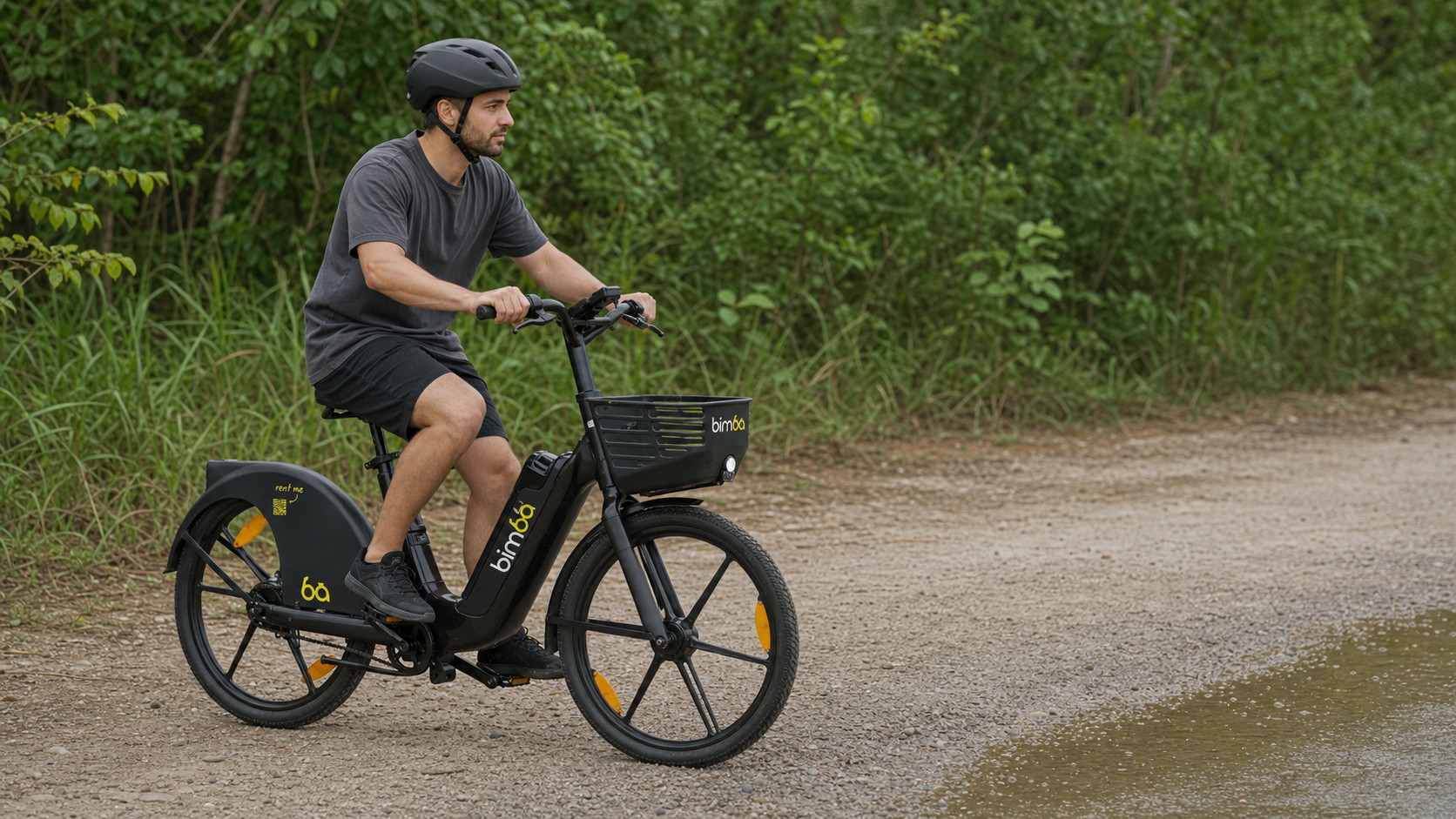
Loose gravel and sand can reduce traction. Keep the vehicle as upright as possible, steer smoothly and avoid grabbing the brakes or making a sharp turn.
Wet surfaces increase stopping distance. Brake earlier, avoid deep water you cannot assess and stop riding if rain or visibility makes the route uncertain.
Watch for doors opening, vehicles turning and people stepping into the road. Slow down around busy businesses and give pedestrians a generous, predictable path.
Check the lights before starting and wear something visible. If you cannot clearly read the surface ahead, stop somewhere safe and choose another way to travel.
Know your vehicle
Adjust the seat before moving. Electric assistance and the vehicle’s weight can feel different from a conventional bicycle, so begin smoothly and allow more space to turn and stop.
Stand in a stable position, push off gently and accelerate gradually. Small wheels react more strongly to potholes, gravel and sudden surface changes, so reduce speed before reaching them.
Ending the ride safely
Bimba uses two kinds of approved parking in Santa Teresa. The live app shows which option is available and provides the current end-ride instructions. In either case, leave enough clear space for pedestrians, wheelchairs, doors, driveways and traffic.
At a physical Bimba dock, guide the vehicle fully into the station. The dock detects the vehicle, locks it and begins charging. Check the indicator and the Bimba app before walking away.
Current physical dock locations: Somos Hostel · Namoré · BAC Bank · Rico's · Liam's Place (near The Bakery)Bimba also has approved parking at participating businesses without physical docking hardware. Use only the parking point shown in the live app and follow the on-site and in-app instructions.
The live Bimba app is the source of truth for current availability, approved parking and end-ride instructions.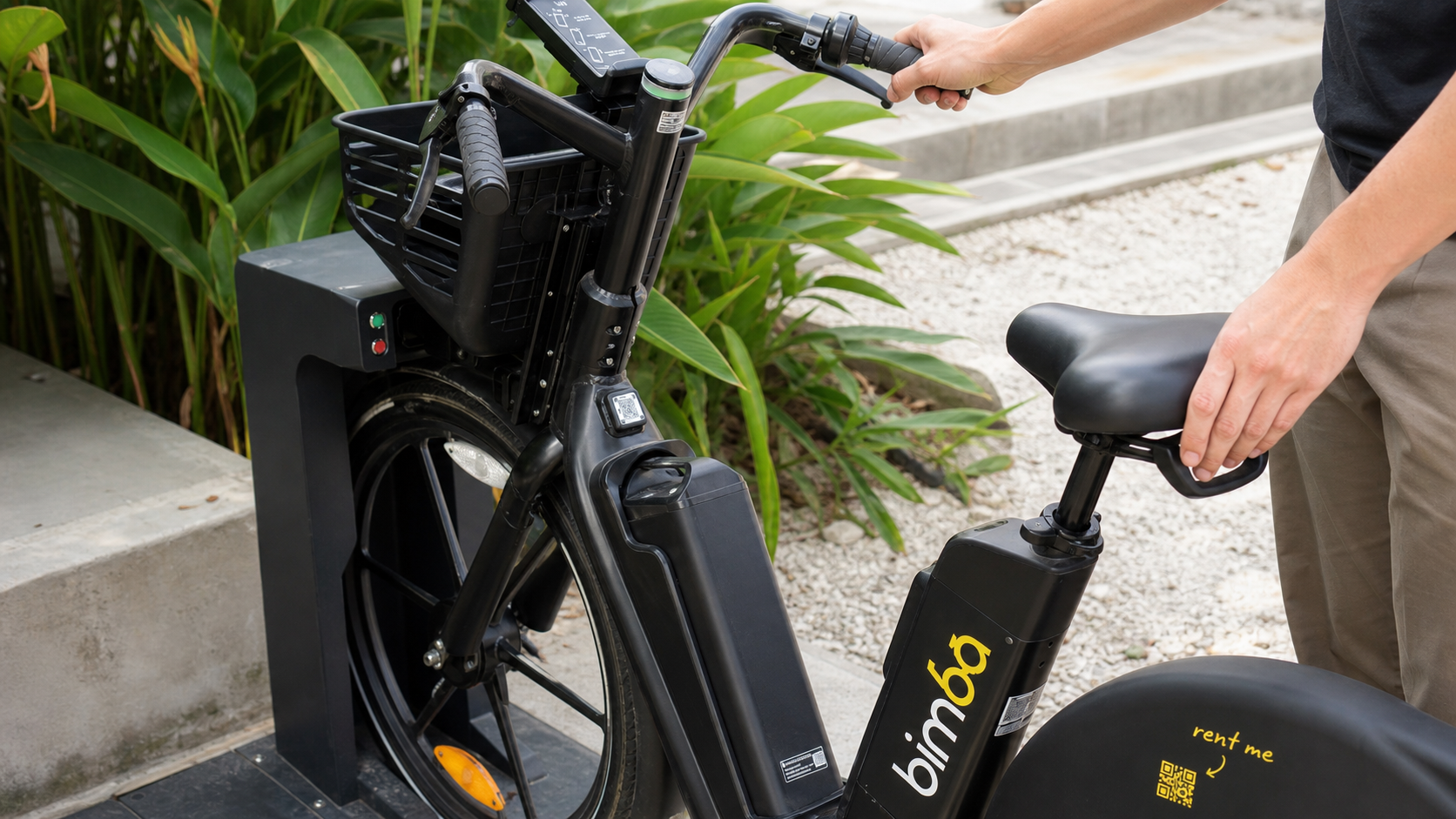
If something feels wrong
If the brakes, steering, wheel or controls behave unexpectedly, slow down without making a sudden movement and stop as soon as there is a safe place to do so. Move out of the travel path and do not continue simply to see whether the issue disappears.
Use the Bimba support channel to share the vehicle number, your location and a short description of what happened. If there is an immediate danger or serious injury, contact Costa Rican emergency services first; Bimba customer support is not an emergency-response service.
Safety questions
Review the current Bimba app and Rider Agreement whenever operational guidance changes.
Yes. Bimba strongly recommends a properly fitted helmet for every e-bike and e-scooter ride. Bring your own helmet and fasten it according to the manufacturer’s instructions.
Check the brakes, tires, lights, frame and controls. Adjust the e-bike seat while stopped and review the battery information in the app. Choose another vehicle if anything appears damaged or behaves unexpectedly.
Do not ride when rain, wind, flooding, visibility or road conditions make the trip unsafe. Wet, sandy and uneven surfaces can reduce grip and increase stopping distance. Choose another transport option when conditions are poor.
No. A Bimba vehicle is intended for one eligible rider. A passenger changes the balance, braking distance and control of the vehicle.
Park only at an approved Bimba location shown in the app. Leave the vehicle upright and keep roads, driveways, entrances, ramps and pedestrian routes clear.
Stop riding as soon as you can do so safely. Move out of traffic, do not restart the vehicle and contact Bimba support with the vehicle number, location and a description of the problem.
Ready to ride responsibly?
Use the live map to choose an available vehicle and review the complete ride flow before starting. If the vehicle, road or weather does not feel right, there is no need to force the trip, choose another Bimba or another way to travel.