


The fastest practical route to Santa Teresa is usually an international arrival at San José airport followed by a domestic flight to Cóbano and a pre-arranged road transfer. The simplest ground option is a private shuttle. The lowest-cost route is normally public bus, while a rental car makes sense when Santa Teresa is one stop in a wider Nicoya Peninsula trip.
There is no single best route for every traveler. Arrival time, checked luggage, surfboards, children, mobility needs and the final road to the accommodation can change the answer. This guide was reviewed August 6, 2026 using current airport, airline, ferry, regulator and transport sources.
Quick Answer: What Is the Best Way to Get to Santa Teresa?
Fly to Cóbano Airport (ACO) when time matters and your international connection leaves a safe buffer. The airport's official site places it about 17 minutes from Santa Teresa and Mal País, but that is an orientation figure—not a guarantee for every villa or traffic condition. Book the final taxi or shuttle before boarding the domestic flight.
From San José / SJO, choose a door-to-door shuttle for the least coordination, or take the Puntarenas–Paquera ferry route by bus or rental car for a lower-cost or flexible journey. From Liberia / LIR, a pre-booked shared or private shuttle usually follows the road through Guanacaste and the Nicoya Peninsula; current listings commonly estimate roughly 4.5–5.5 hours, depending on stops, weather and road conditions.
Do not plan a same-day chain using the last flight, last ferry or last bus without a backup. The final arrival is part of the itinerary: save the exact accommodation pin, disclose every bag and surfboard, and confirm whether the vehicle can reach the property entrance.
Routes to Santa Teresa Compared
Times below are realistic planning ranges, not timetables. Check each operator for the travel date and add international-arrival, baggage and check-in time.
| Route | Realistic planning time | Best for | Main limitation |
|---|---|---|---|
| Domestic flight to Cóbano + transfer | About 1.5–3 hours after a workable SJO connection | Saving most of a travel day | Small-aircraft schedules, weather and baggage limits |
| Private shuttle from SJO | Often 5–7+ hours including ferry or road variables | Families, groups, luggage and door-to-door simplicity | Higher total price and ferry/traffic delay |
| Shared shuttle from SJO | Often 5.5–7+ hours | Solo travelers and couples | Fixed departure, other pickups and minimum operation rules |
| Public bus from San José | Allow most of the day | Lowest budget | Terminal logistics, schedule and luggage handling |
| Rental car via Paquera ferry | Often 5–7+ hours | Multi-stop peninsula itinerary | Insurance, vehicle ticket, ferry queue and first-time driving |
| Shared shuttle from LIR | Commonly 4.5–5.5 hours | Solo travelers arriving on a compatible schedule | Advance booking and fixed departure |
| Private transfer from LIR | Roughly 4–5.5 hours | Groups, surfboards and later arrivals | Price and long drive after flying |
| Long-distance taxi | Similar to private road transfer | Urgent direct trip with confirmed driver | Complete quote and vehicle suitability required |
Fly to Cóbano Airport: The Fastest Route
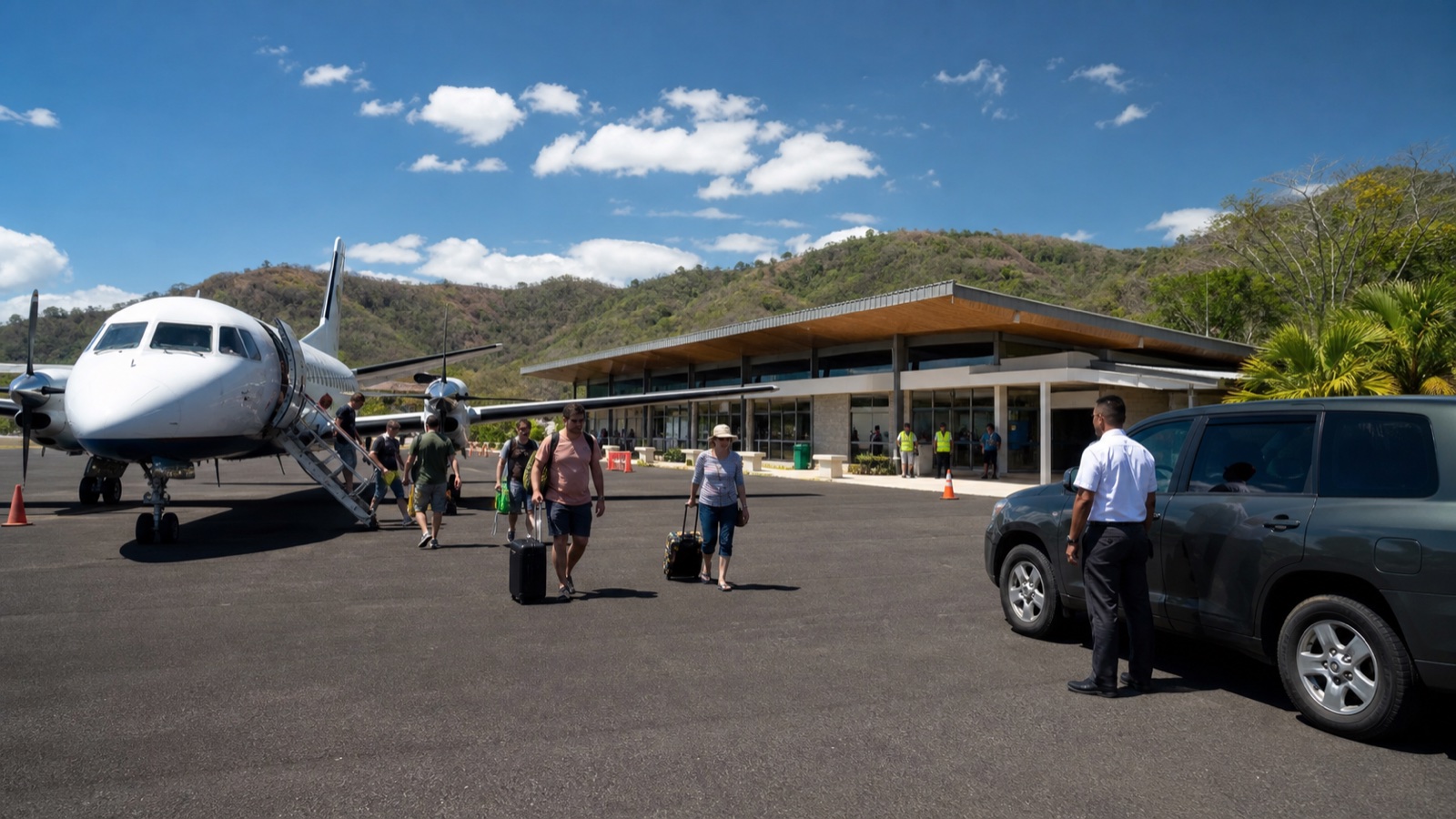
Cóbano Airport uses IATA code ACO and opened as the peninsula's closest scheduled-air gateway. Its official site names SANSA and CarmonAir-related services and places Santa Teresa and Mal País about 17 minutes away. The actual transfer depends on the accommodation zone, traffic and final access road; a hilltop villa is not the same destination as the Playa Carmen crossroads.
Book the domestic segment as a separate flight unless the itinerary explicitly says otherwise. Separate tickets usually mean the domestic airline is not responsible when the international flight arrives late. Allow time for immigration, checked bags, customs, moving between the international and domestic process and the airline's check-in deadline.
Weather and operational needs can change a small-aircraft schedule. Do not connect a Cóbano arrival directly to an important event with no margin. Carry medication, documents and one essential clothing layer in the permitted cabin bag rather than checking everything.
Domestic Flight Baggage and Surfboards
Small-aircraft baggage rules are not the same as the international allowance. Costa Rica Green Airways currently publishes Cóbano checked allowances that vary by fare: 25 lb / 11.5 kg for Economy, 35 lb / 15.8 kg for Standard, 40 lb / 18.6 kg for Standard Plus and 50 lb / 22.6 kg for Full, plus a published 10 lb / 4.5 kg cabin allowance. It also lists different excess-pound charges by fare.
Those figures apply to the airline's current policy at review time; confirm them on the final booking screen. Aircraft payload and dimensions matter as well as weight. A full-size surfboard bag, several boards or oversized luggage needs explicit written approval before purchase—not a note added at the airport.
Check SANSA's current baggage terms separately if flying SANSA; do not transfer another airline's allowance to the ticket. Photograph the packed board bag, use proper padding and identify what the carrier excludes from liability. If the board cannot be confirmed, take a ground shuttle or rent equipment locally.
| Green Airways Cóbano fare | Published checked allowance | Published cabin allowance | Published excess rate |
|---|---|---|---|
| Economy | 25 lb / 11.5 kg | 10 lb / 4.5 kg | US$2.00 per extra lb |
| Standard | 35 lb / 15.8 kg | 10 lb / 4.5 kg | US$1.80 per extra lb |
| Standard Plus | 40 lb / 18.6 kg | 10 lb / 4.5 kg | US$1.50 per extra lb |
| Full | 50 lb / 22.6 kg | 10 lb / 4.5 kg | US$1.00 per extra lb |
Cóbano Airport to Santa Teresa
Arrange the final vehicle before flying. Send the accommodation pin, flight number, passenger count and a complete luggage list. Ask whether the quote ends at the door or at an accessible main-road meeting point. Some final roads are steep, narrow or weather-sensitive, so the operator must match the vehicle to the pin.
At the airport, confirm the driver's name and vehicle before entering. Do not accept an unverified ride because someone calls out the destination. If the flight is delayed, use the same contact channel that confirmed the pickup and ask whether waiting time changes the price.
Cóbano town, Cóbano Airport, Tambor and Santa Teresa are different places. A quote from ‘Cóbano’ may refer to the town center rather than the airport. Write the airport code ACO and exact destination in the booking.
San José to Santa Teresa by Shuttle
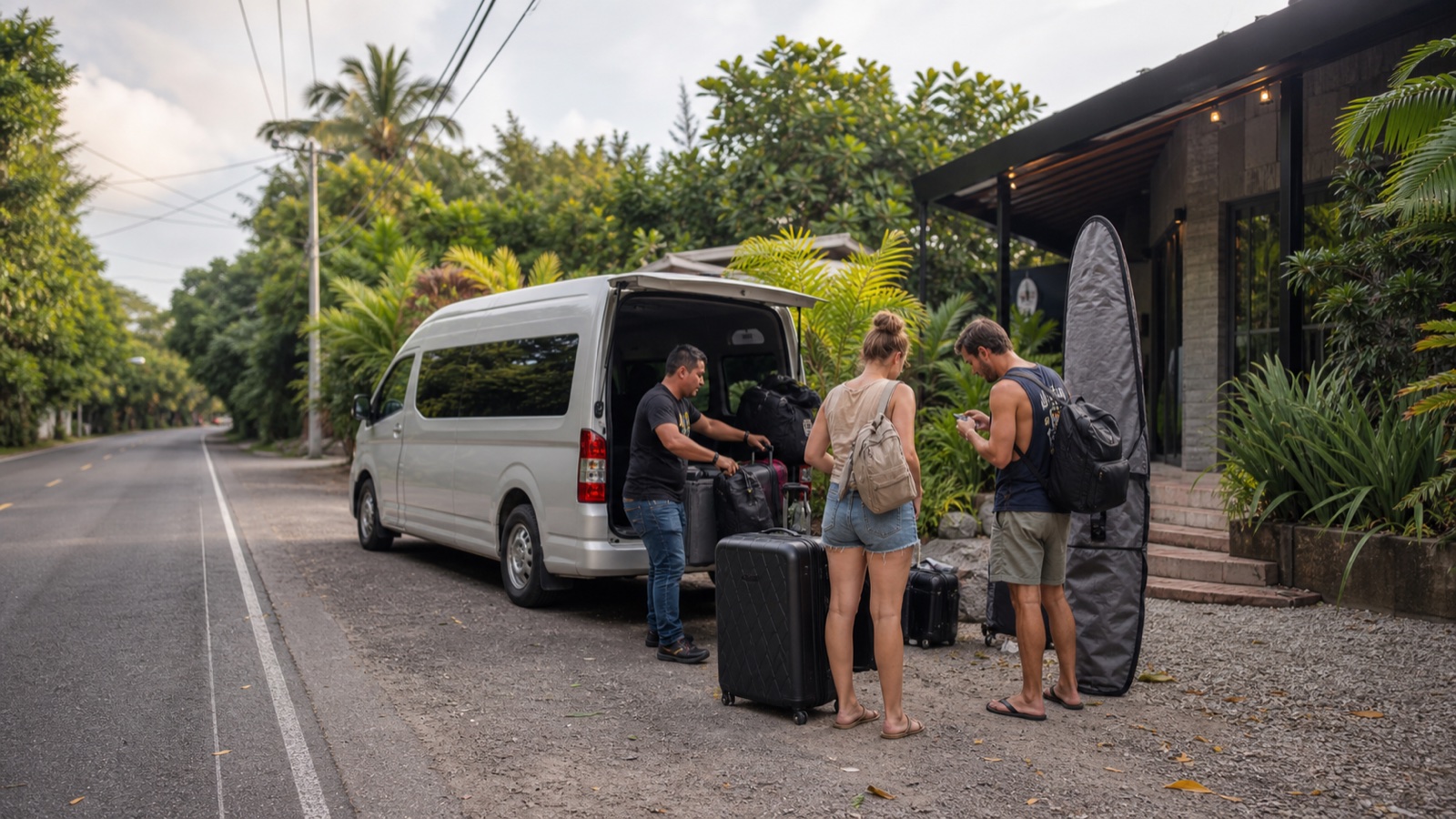
A private shuttle is the most straightforward ground route for families, groups and travelers carrying equipment. It can collect at SJO or a San José hotel and deliver to the confirmed accommodation. Ask whether the route uses the Puntarenas–Paquera ferry, whether ferry tickets are included, how meal or restroom stops work and what happens if traffic misses the planned sailing.
Shared shuttles lower the per-person price but run on fixed windows and may include other pickups. ‘Door to door’ can still mean a common pickup hotel or an accessible drop-off point when the accommodation road is unsuitable. Confirm the exact meeting location, minimum passenger rule, waiting policy and cancellation terms.
Do not choose only from the lowest advertised ‘from’ price. Compare tax, ferry, surfboard charge, child seat, after-hours pickup, detour, waiting and final-road access. A written total prevents an airport argument after a long flight.
The Puntarenas–Paquera Ferry
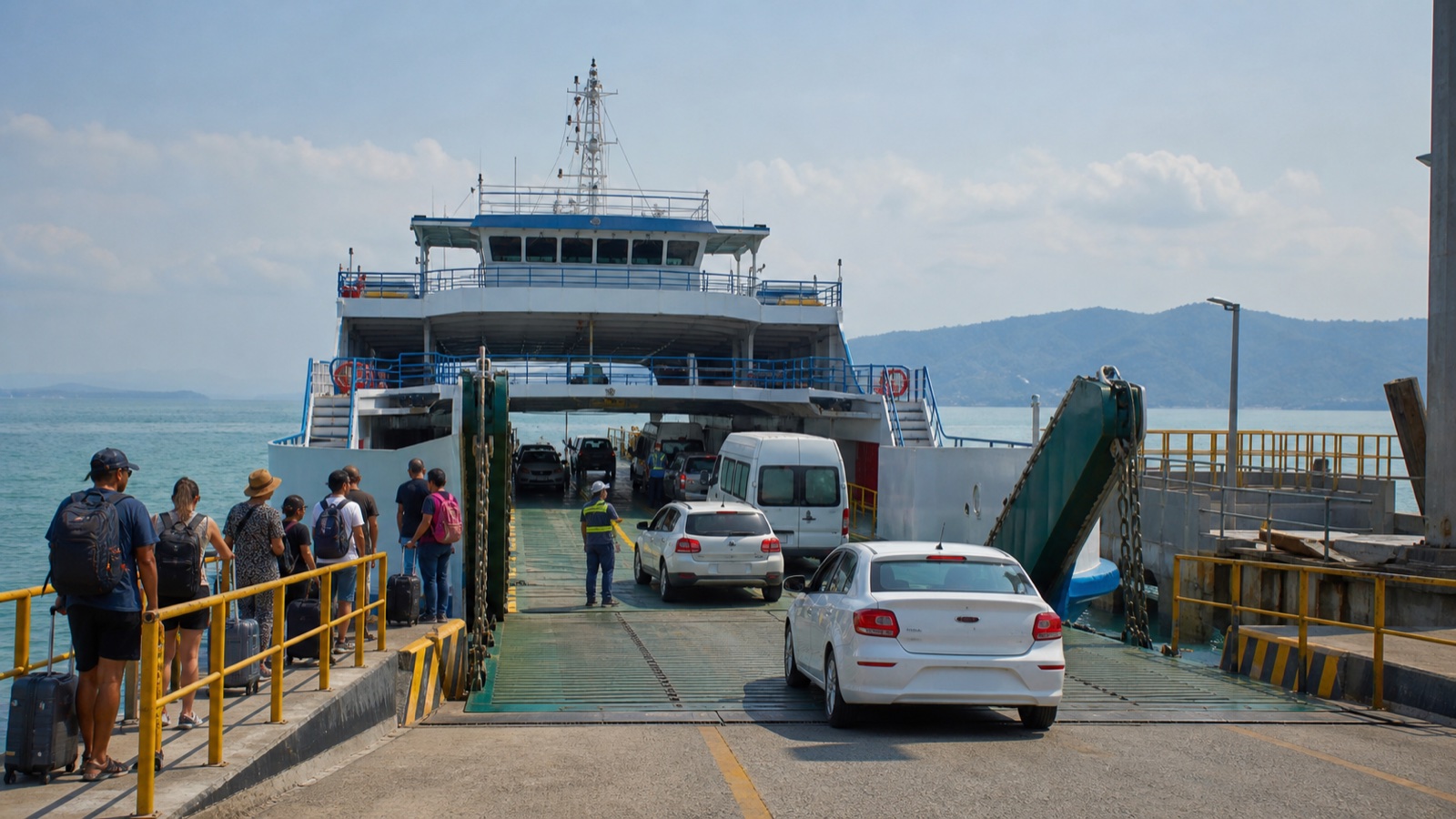
The ferry crosses the Gulf of Nicoya and is the key connection for many San José road routes. Naviera Tambor operates the Puntarenas–Paquera service. Use its official live system for the sailing schedule and status; old travel blogs can retain a timetable after an operational change.
Costa Rica's public-services regulator ARESEP updated passenger fares effective July 1, 2026: the published Puntarenas–Paquera adult passenger fare is ₡810 and the minor fare is ₡480. Vehicle fares are separate and depend on category. Check the official operator and regulator pages for the exact vehicle total.
An online sale may cover only part of capacity, and buying a ticket does not authorize arriving at the departure minute. Drivers need time for the vehicle queue and boarding instructions. Pedestrians should distinguish the passenger ticket from any bus or onward connection. Keep documents, water and valuables with you instead of leaving essentials buried in a vehicle.
| Ferry item | Current verified detail | What still changes |
|---|---|---|
| Operator | Naviera Tambor, Puntarenas–Paquera | Sailing status and operational notices |
| Adult passenger | ₡810 from July 1, 2026 | Future regulator adjustments |
| Minor passenger | ₡480 from July 1, 2026 | Eligibility and future adjustments |
| Vehicle | Separate category-based fare | Vehicle class, capacity and ticket availability |
| Schedule | Check official live system | Weather, maintenance and special operations |
San José to Santa Teresa by Public Bus
Public bus is normally the lowest-cost route, but it demands the most schedule discipline. Verify the current service with the responsible operator and Costa Rica Tourism Board bus information, because departure terminal, direct-through service, ferry handling and transfers can change.
Ask whether the bus continues through the ferry journey or whether passengers manage any segment separately. Keep cash in colones, small enough for normal purchases, and arrive early enough to identify the correct platform. Protect documents and electronics; luggage placed below the bus is not the place for medication or the only copy of a passport.
If the itinerary requires a connection in Cóbano, confirm the onward bus to Santa Teresa or Mal País. The local corridor service and long-distance service are not the same timetable. Avoid the final connection of the day unless the accommodation has arranged a backup pickup.
Driving From San José With a Rental Car
A rental car makes sense when you will use it beyond the arrival day: Montezuma, Cabuya, Mal País, remote accommodation or a wider peninsula itinerary. It is expensive friction if the car will remain parked while you walk or use local transport.
Before accepting the car, understand mandatory and optional insurance, deposit, driver requirements, roadside support, prohibited roads and ferry procedures. Photograph every side, wheel and windshield. Confirm whether the reservation guarantees a specific clearance or drivetrain; ‘SUV’ is not a precise capability statement.
Use the Paquera route unless the rental company or current road information supports a different plan. Download offline maps, avoid unfamiliar night driving and never enter a water crossing because a navigation app draws a line through it. Rain can change a passable road during the stay.
Liberia Airport to Santa Teresa
Liberia's Guanacaste Airport (LIR) is useful when the wider trip includes northern Guanacaste or the international fare and schedule are substantially better. It is not a short beach transfer. Current shuttle listings commonly describe roughly 4.5–5.5 hours by road, and real time varies with pickups, weather, route and the final drop-off.
Pre-book a shared shuttle only when the flight arrives before the provider's cutoff with enough time for immigration and baggage. A seat request is not always an immediate confirmation; some operators run subject to availability or minimum passengers. Save the written confirmation and pickup instructions.
For a group, compare the combined shared fares with a private vehicle. A private transfer can become competitive once several seats, surfboard charges and waiting flexibility are included. Avoid a first-time self-drive after a late international arrival; sleep near Liberia or book a professional transfer.
SJO or LIR: Which International Airport Is Better?
Choose SJO when a domestic Cóbano connection fits, when the San José flight is much better or when the trip includes the central part of Costa Rica. Choose LIR when the trip starts in Guanacaste or a confirmed road transfer aligns cleanly with arrival.
Do not compare only the international airfare. Add domestic flight or shuttle price, hotel required by a missed connection, baggage charges and the value of a travel day. A cheaper LIR ticket can cost more after a private transfer; an expensive SJO ticket can save a night when it connects efficiently to ACO.
For departure, reverse the analysis with a larger buffer. Missing an international flight is more consequential than reaching the beach late. Confirm the pickup day and date—especially for flights after midnight—and follow the international airline's check-in guidance.
Arriving From Montezuma, Nosara or La Fortuna
From Montezuma, the distance looks short but local roads and connections still require planning. Confirm a direct taxi, shuttle or the current Cóbano connection rather than assuming frequent through service. A water-taxi product may exist as part of a wider route, but weather, surf and luggage rules make it a separate transport decision—not a universal shortcut.
Nosara and La Fortuna are long transfers. Shared shuttles can be efficient when the date and pickup zone match; a private vehicle gives flexibility for a group. Do not combine unrelated public-bus fragments from an old forum without verifying every transfer.
A domestic flight may connect some Costa Rican destinations to Cóbano on particular schedules. Search the actual travel date and compare total door-to-door time, not flight time alone.
Surfboards, Families and Accessibility
Declare the number and length of surfboards before booking any flight or vehicle. A surfboard bag can change aircraft acceptance, van capacity, roof-rack needs and price. Never assume it will be tied on after arrival.
Families should request the correct child restraint in advance and confirm whether it is included. For mobility needs, describe transfer assistance, step height, wheelchair dimensions and the final property access. The airport-to-town portion can be accessible while the villa entrance is not.
Groups should avoid splitting bags and people across uncoordinated vehicles unless each traveler has the destination pin and contact. Keep medication, child essentials and one change of clothing accessible throughout a ferry or long road day.
Late Arrivals and Missed Connections
A late international arrival usually removes the same-day domestic flight and public-bus options. The safest plan may be an airport hotel followed by a morning flight or shuttle. Compare that controlled overnight with an exhausted five-hour drive.
If an international delay threatens a separately booked domestic flight, contact the airline before the check-in cutoff. Travel insurance may help only when the reason and separate-ticket terms are covered; read the policy instead of assuming.
For a missed ferry, ask the driver for the revised plan and total impact. Do not pressure a driver to speed toward a sailing. A later safe arrival is better than converting a schedule problem into a road risk.
What to Book Before Your International Flight
- Exact accommodation pin and access notes.
- Domestic flight or ground transfer with written confirmation.
- Baggage and surfboard acceptance for every segment.
- Final Cóbano transfer—not only the flight.
- Ferry ticket or operator plan when driving.
- Child seat or accessibility assistance.
- Arrival-night food and water when service may be closed.
- Backup plan for the last connection.
- Offline copies of tickets, addresses and contacts.
After You Arrive: Do You Need a Car?
Do not extend an airport rental automatically. A central Santa Teresa stay may work with walking, taxis and suitable Bimba trips, while a hilltop villa, young family or multi-beach itinerary may justify keeping a car.
Bimba pricing currently publishes US$1 to unlock plus US$0.50 per minute, or a US$15 daily pass with 100 minutes. Use the live app for current availability, boundaries and approved parking. Bimba is for suitable local trips after arrival—not for airport luggage transfers.
Compare daily options in the getting around Santa Teresa guide. For airport pickups and important departures, use the taxi guide; Santa Teresa does not have reliable Uber service, as explained in the Uber guide.
How to Get to Santa Teresa FAQ
What airport is closest to Santa Teresa?
Cóbano Airport (ACO) is the closest scheduled-air airport. Its official site states about 17 minutes to Santa Teresa and Mal País, subject to the final destination and road conditions.
Can I fly directly from San José to Santa Teresa?
You can fly from the San José area to Cóbano, then take a pre-arranged road transfer. Santa Teresa does not have its own international airport.
How long does it take from SJO?
A domestic flight route can use part of a day when connections work. Ground routes commonly need roughly 5–7 or more hours once traffic, ferry and stops are included.
How long does it take from Liberia?
Current shuttle listings commonly estimate about 4.5–5.5 hours. Treat this as a planning range, not a guarantee.
How much is the Paquera ferry?
ARESEP lists the adult passenger fare at ₡810 and minor fare at ₡480 from July 1, 2026. Vehicles pay a separate category fare.
Is there a direct public bus from San José?
Services and through-routing can change. Verify the current operator, terminal, ferry procedure and date rather than relying on an old timetable.
Do I need a 4x4?
Not for every main-road stay. Ask the accommodation about the exact final road, season and parking before paying for a vehicle category.
Should I rent a car at Cóbano Airport?
Only if the stay requires one. A pre-booked transfer plus local transport may be simpler for a central accommodation.
Can I bring a surfboard on a domestic flight?
Only with the carrier's advance approval under current dimension, weight and aircraft rules. Written confirmation is essential.
What is the safest plan for a late arrival?
Use a confirmed professional transfer or stay near the arrival airport and travel in daylight. Do not build the itinerary around an uncertain final bus, ferry or flight.
Sources, Disclosure and Last Review
Airport and flight context was checked against the official Cóbano Airport site and Costa Rica Green Airways baggage policy. Ferry operation and status were checked through Naviera Tambor's live system; current passenger fares come from ARESEP. Public-transport context was cross-checked against Costa Rica Tourism Board bus resources.
Reviewed August 6, 2026. Flight schedules and fares, shuttle operation, ferry sailings, bus terminals, road conditions and baggage rules can change. Confirm the exact travel date with the responsible carrier and send corrections with a primary source to hello@gobimba.com.
Bimba operates local shared mobility and may benefit after travelers arrive. It does not provide the airport or long-distance routes described here. Route rankings are editorial and unpaid, and Bimba is not recommended for luggage transfers, airport connections or any trip outside live service rules.