

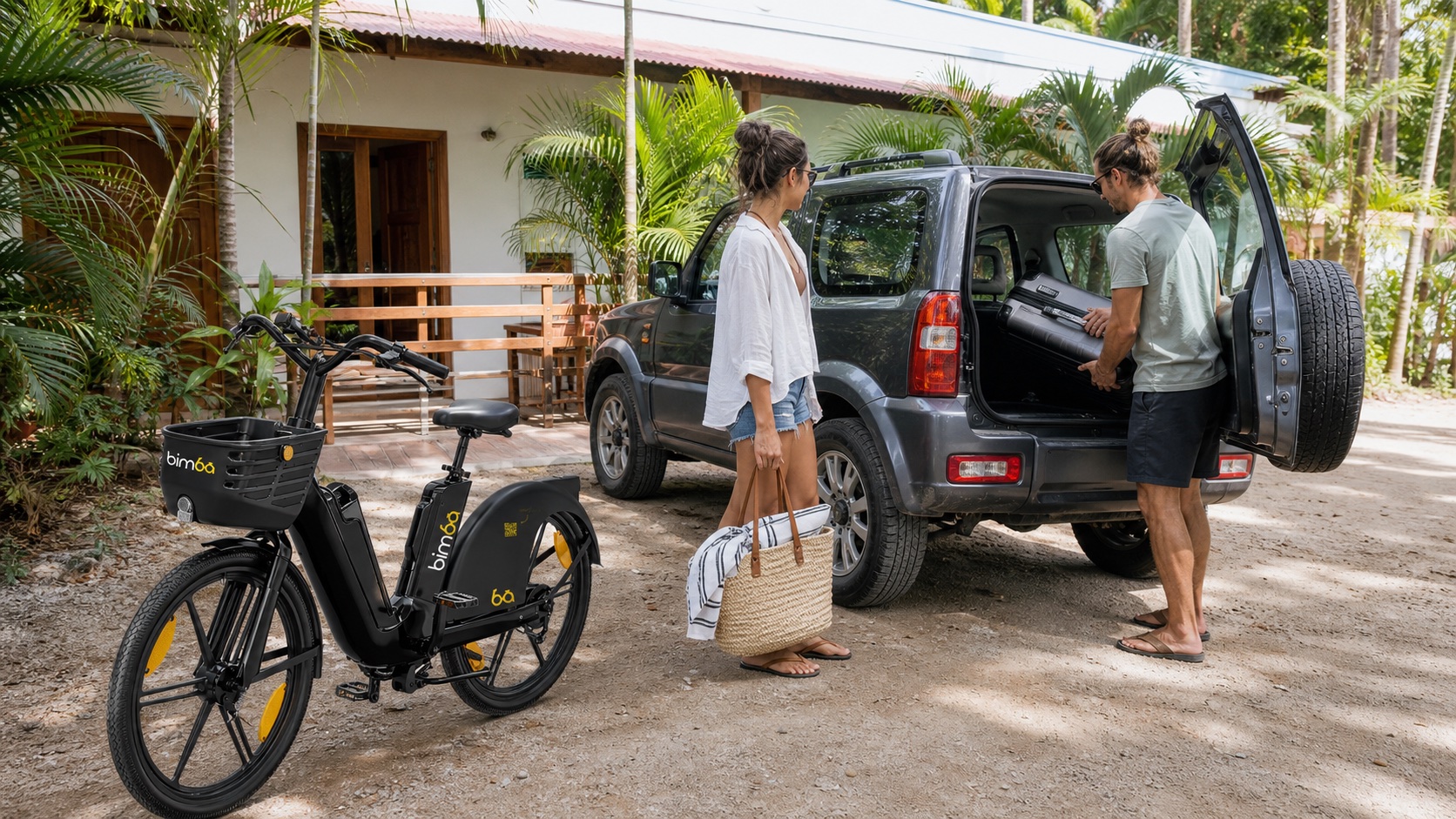
An e-bike and a rental car solve different Santa Teresa problems. A Bimba can be economical for suitable short trips along the active local network; a car earns its higher daily commitment when people, luggage, rain, steep access or regional travel demand protection and range.
Bimba publishes this comparison and operates the shared e-bike service discussed. We have therefore included the situations in which a rental car is clearly the better choice, plus a practical hybrid plan that often costs less than keeping either vehicle for every hour of the stay.
Quick Answer: E-Bike or Rental Car in Santa Teresa?
Choose a Bimba e-bike when you are one rider making short, suitable trips in daylight and can confirm a vehicle, permitted route and approved parking in the app. Bimba costs US$1 to unlock plus US$0.50 per minute, or US$15 for a daily pass with 100 included minutes.
Choose a rental car when you are traveling with children, several people, luggage or surf equipment; staying on a steep or rough access road; expecting regular rain; or planning repeated trips beyond Santa Teresa. Current public Costa Rica examples show why the booking-screen base rate is not enough: insurance is mandatory and can materially increase the total, while one transparent operator currently publishes an insured compact from US$40 per day for a week or US$90 for one day, and an automatic 4x4 from US$70 per day for a week or US$120 for one day.
For many visitors, the best answer is not all-or-nothing. Arrange a car or transfer for arrival and regional days, use Bimba for compatible local journeys, and keep a confirmed taxi option for night, rain or alcohol.
E-Bike vs Car Rental: The Decision at a Glance
Start with the hardest trip, not the average one. A five-minute ride to breakfast does not justify a car by itself, but one steep villa road, an airport transfer with luggage or three regional day trips may. Conversely, a car that sits parked for most of a beach week can be an expensive answer to a short-corridor problem.
| Factor | Bimba e-bike | Rental car |
|---|---|---|
| Current pricing | $1 unlock + $0.50/minute; $15 daily pass with 100 minutes | Live quote; insurance, tax, vehicle class and season affect total |
| Passengers | One rider per vehicle | Usually better for couples, families and groups |
| Luggage and boards | Very limited; do not improvise carrying | Better capacity when equipment is secured correctly |
| Rain | Poor choice when grip or visibility is reduced | Weather protection; driving conditions still require care |
| Steep or rough access | Only where route and vehicle are suitable and permitted | High-clearance or 4x4 may be required |
| Long day trips | Not designed for unrestricted regional travel | Stronger fit when rental terms and road suit the route |
| Parking | Use only approved app parking | Needs legal, secure space and may add friction |
| Commitment | Pay per ride or daily pass; subject to live availability | Daily contract, deposit, insurance, fuel and return obligations |
What a Bimba Trip Really Costs
Bimba's pay-as-you-go price is easy to model: US$1 unlock plus US$0.50 for each minute. A 10-minute ride costs US$6, a 15-minute ride costs US$8.50, and a 20-minute ride costs US$11. Those examples cover one uninterrupted trip and assume the vehicle, route and parking are suitable.
The US$15 daily pass includes 100 minutes. It begins to beat two separate 15-minute pay-as-you-go rides, which would total US$17 because each ride has its own unlock. The pass can also make sense when you expect several short journeys, but unused minutes do not make an unsuitable road or rainy return suitable.
Live availability matters. A pass is not a reservation of a specific vehicle, and the active service area and parking rules still apply. Open the app before building the day around Bimba and keep a backup for a flight, appointment, late dinner or other time-critical journey.
| Bimba use example | Calculation | Illustrative cost |
|---|---|---|
| One 10-minute ride | $1 + 10 × $0.50 | $6 |
| One 15-minute ride | $1 + 15 × $0.50 | $8.50 |
| Two 15-minute rides | 2 × ($1 + 15 × $0.50) | $17 |
| One 20-minute ride | $1 + 20 × $0.50 | $11 |
| Daily pass | 100 included minutes | $15 |
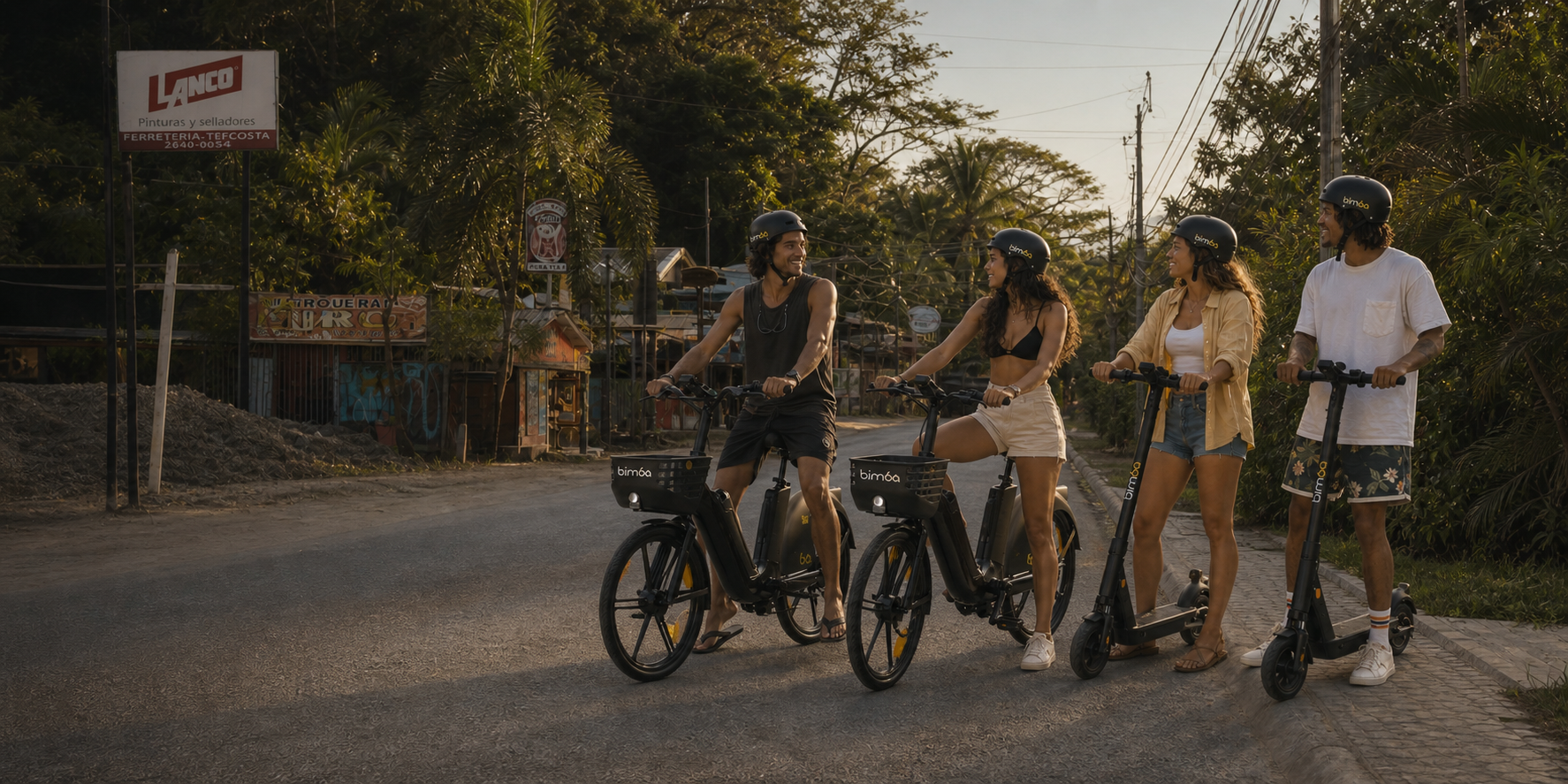
What a Rental Car Really Costs
A car quote needs a line-by-line comparison. Costa Rica's official tourism resources state that basic insurance is mandatory and often increases the total materially. A low rate on an aggregator may exclude insurance, tax, airport or delivery charges, additional-driver fees, child seats or the vehicle class needed for the final road.
As a dated planning reference, AAA Renta Car Costa Rica currently publishes an insured manual compact at US$90 for one day, US$50 per day for three days and US$40 per day for a week or more. Its automatic 4x4 is US$120 for one day, US$80 per day for three days and US$70 per day for a week or more, with a US$500 refundable deposit. This is one operator's public rate sheet—not a Santa Teresa quote and not a market-wide promise.
Add fuel, delivery or one-way return, parking, tolls on a broader itinerary and the cost of days when the car barely moves. Ask whether the price is in U.S. dollars or colones and which exchange rate applies. Request a written final amount before providing card details.
- Base rental rate and exact vehicle class.
- Mandatory liability coverage and optional damage-waiver choices.
- 13% tax and any airport, delivery or one-way fees.
- Security deposit or credit-card hold.
- Fuel and refueling charge.
- Additional driver, child seat, roof rack and roadside assistance.
- Mileage, road, ferry and geographic restrictions.
- Cancellation, late return and early-return rules.
A Five-Day Cost Comparison
The scenarios below illustrate the decision method; they are not personalized quotes. We use published Bimba pricing and the current five-day equivalent of the cited insured car examples. Taxi costs are excluded because they depend on route and quote, and fuel is shown separately as a variable.
A solo traveler using one 15-minute Bimba ride each way for five days would pay US$85 pay-as-you-go. Buying a US$15 daily pass on all five days would cost US$75 and provide far more minutes. A couple needs one vehicle per person, so the same pattern could be US$150 in daily passes. At that point, a compact car quote may become competitive—especially when luggage, rain or shared day trips add value.
The comparison changes again for a family. Four shared vehicles are not a practical substitute for one appropriately sized car, and young children cannot simply be assigned an e-bike. Compare the complete car and child-seat quote rather than multiplying the cheapest transport number.
| Five-day scenario | Illustrative transport spend | What is not included |
|---|---|---|
| Solo: two 15-minute Bimba rides/day | $85 pay-as-you-go or $75 using five daily passes | Taxi fallback, unsuitable routes, unavailable vehicles |
| Two adults: daily passes for both | $150 | Rain/night taxis and trips beyond service area |
| Insured manual compact example | $250 at the published 3-day daily tier | Fuel, delivery and operator-specific extras |
| Insured automatic 4x4 example | $400 at the published 3-day daily tier | Fuel, delivery and operator-specific extras |
| Hybrid: three Bimba pass days + two car days | $45 Bimba plus the live two-day car quote | Taxi, fuel and delivery |
When a Bimba E-Bike Is the Better Choice
Bimba is strongest when the day is geographically compact. If your accommodation, beach, café and dinner are all inside the active area and connected by a route you are comfortable riding, paying for the trips you use can be more efficient than storing and parking a car.
It can also reduce the friction of finding car parking for short stops. That does not make every roadside space acceptable: end the ride only in an approved parking location shown by the app, without blocking pedestrians, entrances or traffic.
Choose an e-bike because it fits the route—not because it appears adventurous or automatically sustainable. The rider still needs confidence, a correctly fitted helmet, weather awareness and conservative judgment around potholes, loose surfaces and mixed traffic.
- One adult rider per available vehicle.
- Short journeys inside the active service area.
- Daylight, dry weather and adequate visibility.
- Little or no luggage and no improvised surfboard carrying.
- Route and approved destination parking confirmed.
- A taxi or other fallback for changing conditions.
When a Rental Car Is the Better Choice
A car becomes valuable when it solves several hard requirements at once. It protects passengers and luggage from rain, keeps a family together, supports child-seat use and gives regional range without depending on shared-vehicle availability. For a multi-stop Costa Rica itinerary, collecting the car before Santa Teresa may be more coherent than arranging separate local and long-distance transport.
Accommodation access can decide the question. A villa may be described as near the beach while sitting above a steep, loose or deeply rutted final road. Send the exact pin to the host and rental company and ask whether a standard car, high-clearance vehicle or 4x4 is appropriate in the current season. The official tourism board recommends matching the vehicle to the real road condition.
A car is also the practical answer for multiple full-size boards, heavy groceries, mobility equipment or repeated night journeys. Secure equipment correctly, keep valuables out of sight and use legal, secure parking.
- Children, several passengers or travelers with mobility needs.
- Airport arrival or departure with luggage.
- Steep, rough or remote accommodation access.
- Repeated trips to Montezuma, Cabuya, Cóbano or beyond.
- Regular heavy rain or need for weather protection.
- Surfboards and equipment that fit safely on an approved rack or inside.
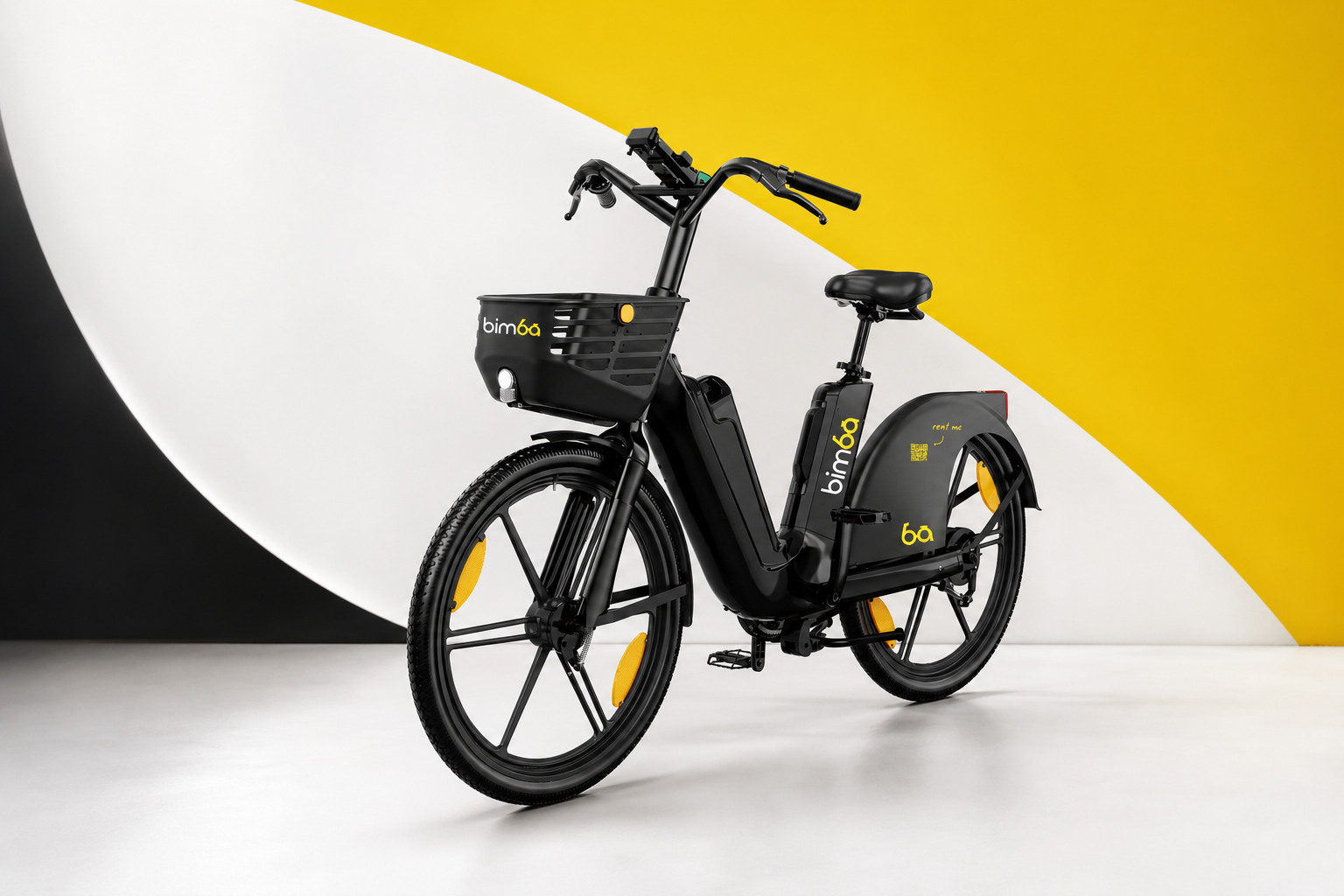
Do You Need a 4x4 in Santa Teresa?
Not every visitor needs four-wheel drive, and a 4x4 badge does not make poor driving safe. The main question is the final approach to where you sleep and the roads on your actual itinerary. A standard car may be adequate for a central stay and established roads in suitable conditions, while steep unpaved access, deep ruts or rainy-season travel may justify clearance and four-wheel drive.
Ask the host for a current, specific answer: Can an ordinary sedan reach the property today? Where is the steepest section? Is there secure lower parking? Then show the exact pin and access notes to the rental company. Get confirmation that the chosen class is permitted and appropriate.
Do not use a rental car to cross rivers or drive on beaches unless the written contract and law explicitly allow it; many agreements exclude such use. Turn around when water depth, surface or clearance is uncertain. Recovery costs and damage exclusions can turn a shortcut into the most expensive part of the trip.
Car Insurance, Deposits and Credit-Card Coverage
Basic insurance and optional protection are commonly misunderstood in Costa Rica. Ask the operator to separate mandatory liability coverage, collision or loss-damage protection, deductible, theft protection and roadside assistance. A phrase such as ‘full insurance’ still needs a written definition and exclusions.
Some rental companies may accept qualifying credit-card collision coverage when the customer supplies the required proof, but that does not automatically replace mandatory local liability insurance. Contact the card issuer before travel and ask for a letter that names Costa Rica, the driver and coverage dates. Confirm acceptance with the rental operator in writing.
The deposit can be larger when optional coverage is declined. Make sure the card has sufficient available credit and ask how long release takes after return. Debit cards may have different rules. Inspect the car in daylight, film every panel, wheel, windshield and interior, and ensure existing damage is acknowledged before departure.
- Mandatory third-party liability amount and scope.
- Collision/theft deductible with each protection option.
- Excluded tires, glass, underbody, roof, keys and water damage.
- Authorized drivers and prohibited roads or uses.
- Credit-card letter format and deposit consequence.
- Accident, police report and insurer notification process.
Inspect the Car Before Leaving
Walk around the exact vehicle with the representative and record one continuous video. Photograph scratches, dents, wheels, tires, windshield, roof and bumpers. Test headlights, brake lights, indicators, horn, wipers, air conditioning, seat belts and locks.
Costa Rica's tourism board advises checking the warning triangles, reflective vest, lug wrench, spare tire and fire extinguisher. Confirm that the jack and spare are usable, not merely present. Save the roadside-support number offline and ask what happens after a flat tire or mechanical failure in the Santa Teresa area.
Record fuel, mileage and return deadline. Make sure the licence plate and rental documents match the car. If a child seat is needed, reserve it in advance and inspect its condition and installation rather than assuming availability.
| Inspection area | Verify before departure |
|---|---|
| Exterior | All damage, tires, wheels, glass, roof and underbody view |
| Safety | Belts, lights, horn, wipers, triangles, vest and extinguisher |
| Roadside | Spare tire, jack, tools and support contact |
| Comfort | Air conditioning, locks, windows and child seat |
| Contract | Drivers, fuel, mileage, road restrictions and return time |
| Evidence | Timestamped video and written damage acknowledgement |
Parking, Traffic and Driving After Dark
A car removes exposure to rain but introduces parking and security responsibilities. Use legal public or property parking, lock doors and keep passports, computers, cameras and bags out of sight. The official tourism safety guidance recommends avoiding street parking when secure public parking is available.
Santa Teresa's corridor mixes pedestrians, bicycles, motorcycles, ATVs, delivery vehicles and cars. Drive slowly enough to stop for an unlit edge, pothole or sudden movement. Dust reduces visibility in dry months; water hides holes and lengthens braking in rain.
Avoid beginning an unfamiliar drive after dark if you can arrive in daylight instead. Save exact pins and offline maps, but treat navigation suggestions cautiously when they propose minor roads or river crossings. Never drive after drinking; use a confirmed taxi and collect the car later.
- Group errands by area instead of crossing town repeatedly.
- Confirm parking before restaurants, beaches and accommodation.
- Keep luggage hidden and doors locked.
- Use headlights and greater following distance in dust or rain.
- Reject unsafe navigation shortcuts.
- Arrange a taxi whenever alcohol or fatigue is involved.
Luggage, Surfboards, Children and Accessibility
A shared e-bike is not designed to carry suitcases, children or an improvised full-size surfboard. Do not hang bags from the handlebars or create a homemade rack. Use an appropriately sized transfer or car when cargo changes balance, vision or control.
For a car, confirm the luggage volume with passengers seated. A compact vehicle advertised for five people may not hold five travelers plus large bags. Full-size surfboards need an approved roof system or sufficient protected internal space, and every item must be secured so it cannot move during braking.
Reserve child seats by the child's size and verify installation. Travelers with mobility needs should confirm door opening, seat height, step-in height and equipment storage with the actual vehicle class. A taxi or private transfer can sometimes solve an arrival day more simply than collecting a rental car under time pressure.
- Count passengers, checked bags, carry-ons and boards before booking.
- Request the exact cargo dimensions when capacity is critical.
- Reserve and inspect child seats.
- Confirm accessible entry and mobility-equipment storage.
- Do not treat an e-bike as a cargo or child-transport workaround.
The Hybrid Plan: Often the Best Value
A mixed plan avoids paying for maximum capability every day. Pre-book a shuttle or car for arrival with luggage, return it after regional trips, then use Bimba for compatible local days. Add taxis for rain, dinner or time-critical journeys. This can preserve flexibility without keeping a car parked throughout a beach-centered stay.
Build the plan before booking accommodation. List each day by exact origin, destination, passengers, cargo and likely return time. Mark trips that require a car, trips that suit Bimba and trips where a taxi is safer. Then compare the total—not isolated daily prices.
A split rental can carry delivery or minimum-day costs, so request both a continuous quote and a shorter quote. Sometimes the weekly car rate makes continuous rental reasonable; sometimes insurance and unused days still make the hybrid plan cheaper.
| Trip type | Default option to compare | Backup |
|---|---|---|
| Airport arrival with bags | Shuttle, transfer or rental car | Pre-booked larger taxi |
| Short dry daytime local trip | Bimba when live conditions align | Walk or taxi |
| Regional sightseeing day | Appropriate rental car | Guided tour or private driver |
| Rainy evening or dinner with alcohol | Confirmed taxi | Stay nearby or change plan |
| Steep villa access | Host-approved vehicle class | Lower pickup point or transfer |
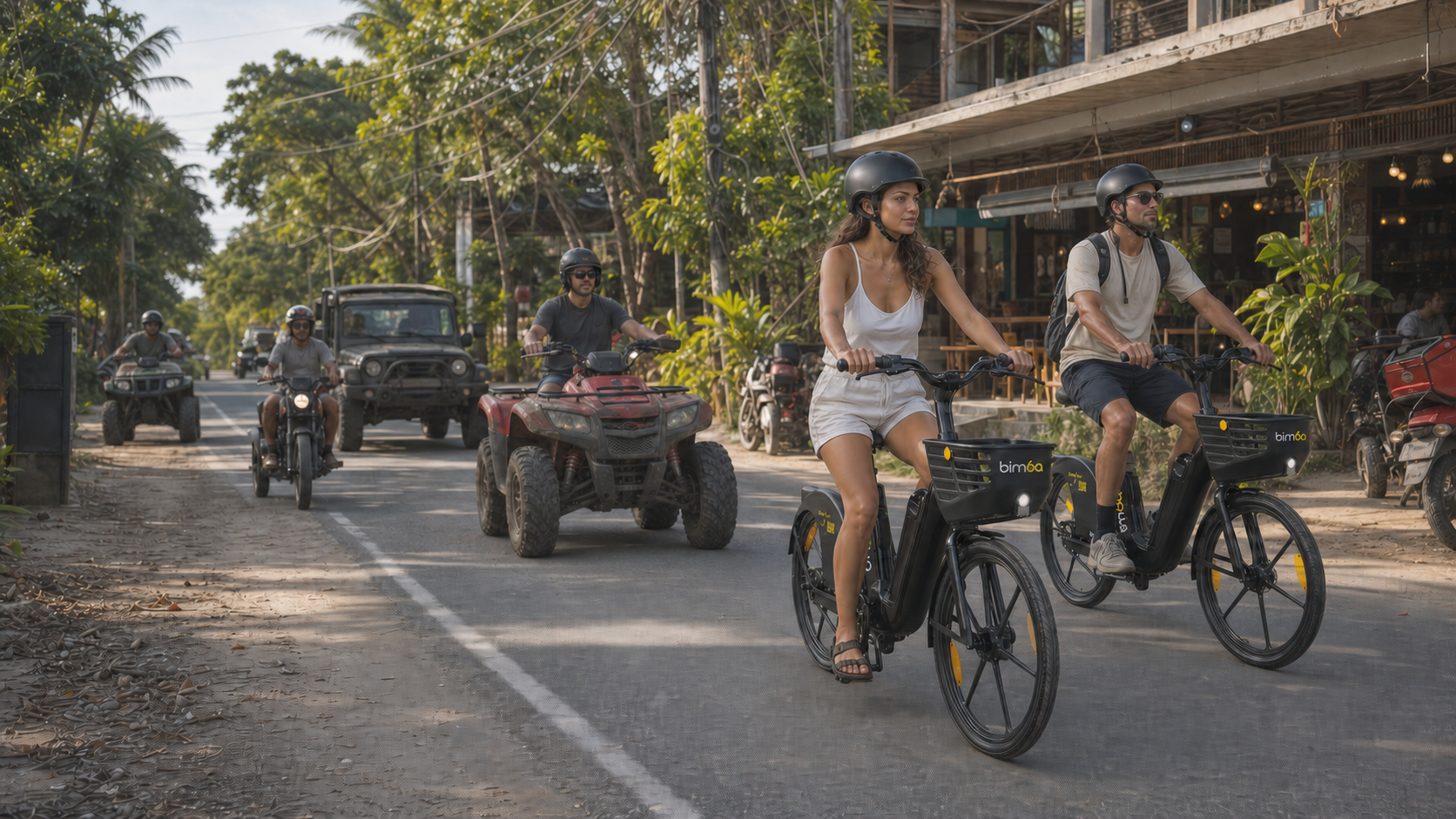
How to Choose in Five Minutes
First, save the exact accommodation pin and ask about the final road. Second, list every trip involving children, luggage, boards, darkness or travel outside Santa Teresa. Third, check whether the remaining short journeys fall inside Bimba's active area and whether each rider is comfortable on the route.
Next, request one written all-in car quote showing insurance, tax, deposit and extras. Compare it with the Bimba daily-pass or per-minute scenarios plus realistic taxi backups. Finally, choose the lowest-cost plan that safely completes the hardest trip—not the plan with the smallest number in an advertisement.
- Exact accommodation and day-trip pins saved.
- Passengers, child seats, luggage and boards counted.
- Road, rain and nighttime needs identified.
- Bimba service area, availability and parking checked live.
- Car quote includes insurance, tax, deposit and extras.
- Taxi backup stored for weather, alcohol and important timing.
E-Bike vs Car Rental Santa Teresa FAQ
Is an e-bike cheaper than renting a car in Santa Teresa?
For one rider making suitable short trips, often yes. Bimba is US$1 to unlock plus US$0.50 per minute, or US$15 for 100 minutes on a daily pass. A car can become better value for several passengers, luggage or repeated longer journeys, but compare the insured all-in quote.
How much is a Bimba daily pass?
The daily pass costs US$15 and includes 100 minutes. Live vehicle availability, active service boundaries and approved parking still apply.
How much does a Costa Rica rental car cost?
Prices vary sharply by season, duration, vehicle and insurance. One current public insured example ranges from US$40 per day for a compact on a weekly rental to US$90 for one day; an automatic 4x4 ranges from US$70 per day weekly to US$120 for one day. Get a Santa Teresa-specific quote.
Is rental-car insurance mandatory in Costa Rica?
Costa Rica's official tourism information says basic insurance is mandatory and can significantly increase the total. Ask the operator to itemize liability, collision protection, deductible and exclusions.
Do I need a 4x4 for Santa Teresa?
Not always. It depends mainly on the exact accommodation access, season and regional itinerary. Ask the host for current road details and have the rental company approve the vehicle class.
Can I take a Bimba to Montezuma or Cóbano?
Do not assume so. Bimba is for suitable trips within the live service area shown in the app, not unrestricted regional travel. Use a car, transfer or other appropriate option for destinations outside it.
Can children ride on a Bimba?
A shared e-bike should not be used as an improvised child-transport vehicle. Choose a car, taxi or transfer with an appropriate child seat and confirm the requirements in advance.
What is best for surfboards?
A correctly sized vehicle with an approved rack or protected internal space is usually more practical. Never carry a full-size board by hand on an e-bike or use an improvised attachment.
What is best during rainy season?
A suitable car offers weather protection and may be the better primary choice, although rain still worsens road conditions. Use Bimba only when the road, grip, visibility and rider confidence remain suitable.
Can I use both?
Yes. A hybrid plan—car or transfer for arrival and regional days, Bimba for compatible local trips, taxis for night and rain—is often the most practical arrangement.
Sources and Final Recommendation
This guide was reviewed on August 6, 2026. Bimba pricing comes from the current service information supplied by Bimba. Rental examples come from AAA Renta Car Costa Rica's public rate page. Insurance, vehicle-choice and inspection guidance is supported by Visit Costa Rica's transport information, its official travel tips and its driver-safety guidance.
Our recommendation is to choose a rental car when it solves a concrete need that repeats: passengers, cargo, weather, difficult access or regional range. Choose Bimba when the real trips are short, suitable and local. If your itinerary contains both, split the job instead of forcing one vehicle to do everything.
Continue with the complete Santa Teresa transport guide, the taxi price guide or the motorcycle rental guide. For live Bimba availability and pricing, download the Bimba app.