

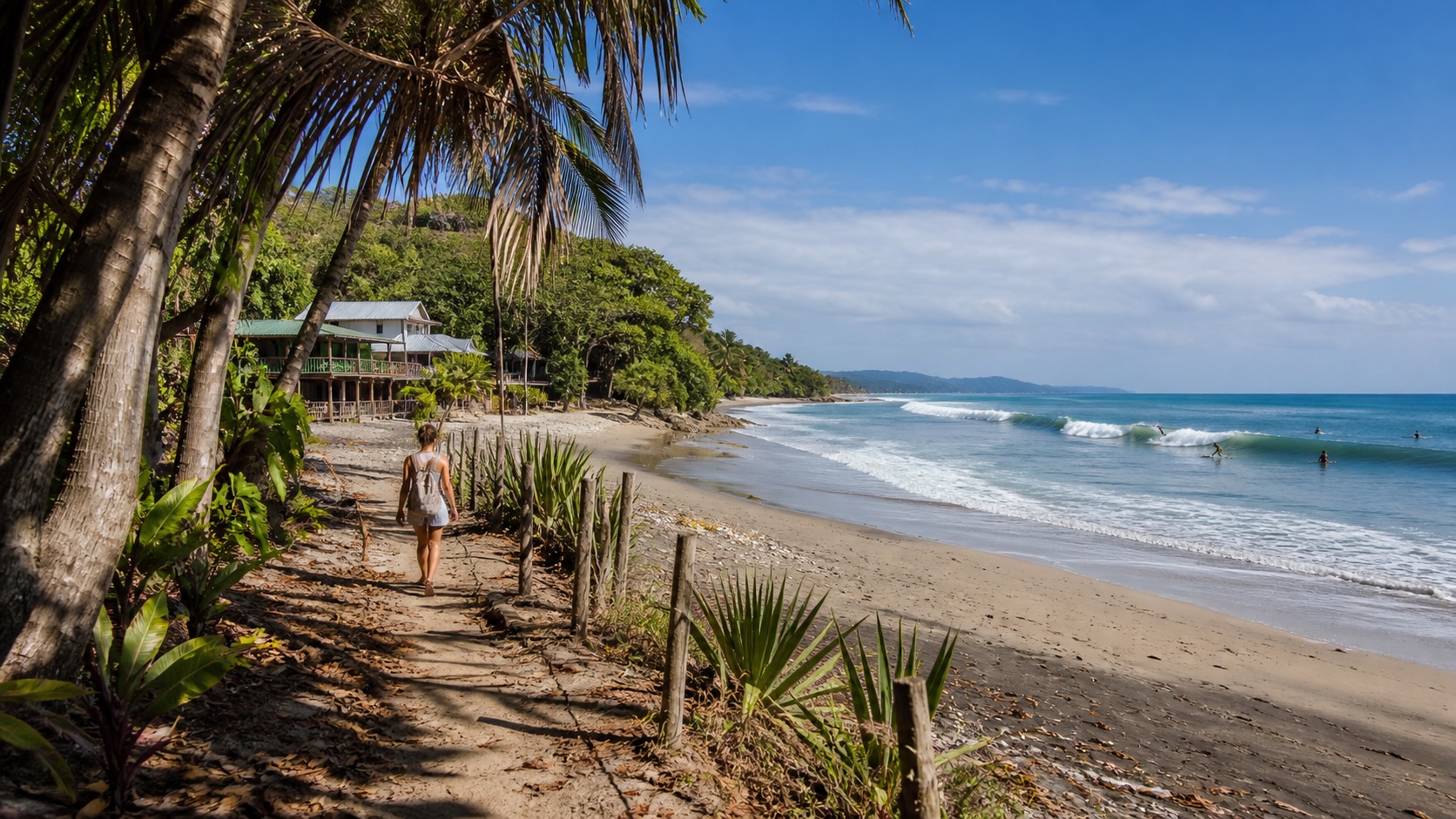
The best beach near Santa Teresa depends on the day you want. Playa Carmen is the strongest all-round choice for a first visit; Playa Hermosa de Cóbano often suits a spacious, quieter beach day; central Santa Teresa and La Lora attract confident surfers; and the rocky Mal País coast rewards travelers who understand tides and changing access.
This is a selection guide, not another destination directory. It compares the named beaches by use case, atmosphere, surf character and practical trade-offs. For exact north-to-south orientation, public-access notes and Bimba parking anchors, use the separate Playa Santa Teresa local guide. Ocean, tide, weather and sandbars change continuously, so no written ranking replaces a same-day assessment.
Quick Answer: Which Is the Best Beach in Santa Teresa?
For most first-time visitors, Playa Carmen is the best all-round beach because its broad sand, familiar landmark area and nearby services make the day easier to organize. That does not mean it is always the safest place to swim or the best surf break. The ocean decides those questions on the day.
Choose Playa Hermosa de Cóbano when your priority is more space and a slower beach day. Choose central Playa Santa Teresa or La Lora when surfing is the main objective and the current conditions suit your real ability. Choose Playa Mal País, Mar Azul or Playa Cuevas for a more specific coastal outing rather than a default first beach.
If you are traveling with children, looking mainly to swim or entering the water for the first time, ask a reputable local surf school, accommodation team or lifeguard where present about the safest section at that moment. A beautiful, uncrowded beach can still have rip currents and strong shore break.
Best Santa Teresa Beaches at a Glance
The rankings below describe the strongest use case for each named area. They are not a permanent safety score. Tide, swell direction, wind, river flow and shifting sandbars can change the water within hours.
| Beach or zone | Best for | Why choose it | Main trade-off |
|---|---|---|---|
| Playa Carmen | Best overall for a first visit | Broad beach, recognizable central area and nearby services | Can be busy; surf and swimming conditions still vary |
| Playa Hermosa de Cóbano | Space and a quieter beach day | Long sandy setting north of town with a slower rhythm | Farther from central Santa Teresa; confirm the exact Hermosa |
| Central Playa Santa Teresa | Surf atmosphere and sunset | Easy to combine with the town's central cafés and surf culture | Punchier water on some days and busier access zones |
| La Lora | Confident surfers and watching the lineup | Locally recognized surf zone with a wide sandy setting | Not a beginner recommendation without a same-day assessment |
| Rocamar / Suck Rock | Experienced surf observation | Distinct rocky surf reference at the northern end | Advanced break and rocks; not a casual swimming choice |
| Playa Mal País | Rocky scenery and low-tide exploration | Coves, working fishing area and a different character from Santa Teresa | Not one uniform sandy swimming beach |
| Playa Mar Azul | A specific, quieter Mal País outing | Named cove and surf point away from the central beach routine | Mixed rock and surf conditions; access requires planning |
| Playa Cuevas / Los Suecos | Small-cove scenery on a suitable day | Compact cove near the far southern end | Remote final access, limited parking and condition-dependent water |
| Playa Manzanillo de Cóbano | A separate northern day trip | Quieter coastal village beyond Hermosa | Outside the central corridor and Bimba's published station network |
Best Overall: Playa Carmen
Playa Carmen is the most practical answer when a first-time visitor asks for one beach. It sits at the southern transition between Santa Teresa and Mal País, close to the area's best-known crossroads. The sand is broad, the beach feels recognizably part of the surf town, and food, lessons, rentals and transport are easier to combine than at a remote cove.
Surf schools frequently use Carmen when the session fits the learner and the day's conditions. Competitor surf guides repeatedly describe its sandy beach break and its value for beginner or improving surfers. That is useful context, not a guarantee: a larger swell, strong current or difficult paddle can make the same section inappropriate for a novice hours later.
Carmen is also convenient for a sunset plan because the return does not automatically require a long trip north or south. Keep valuables with you, establish the return before dark and do not assume crowd density means supervision.
Best for Space: Playa Hermosa de Cóbano
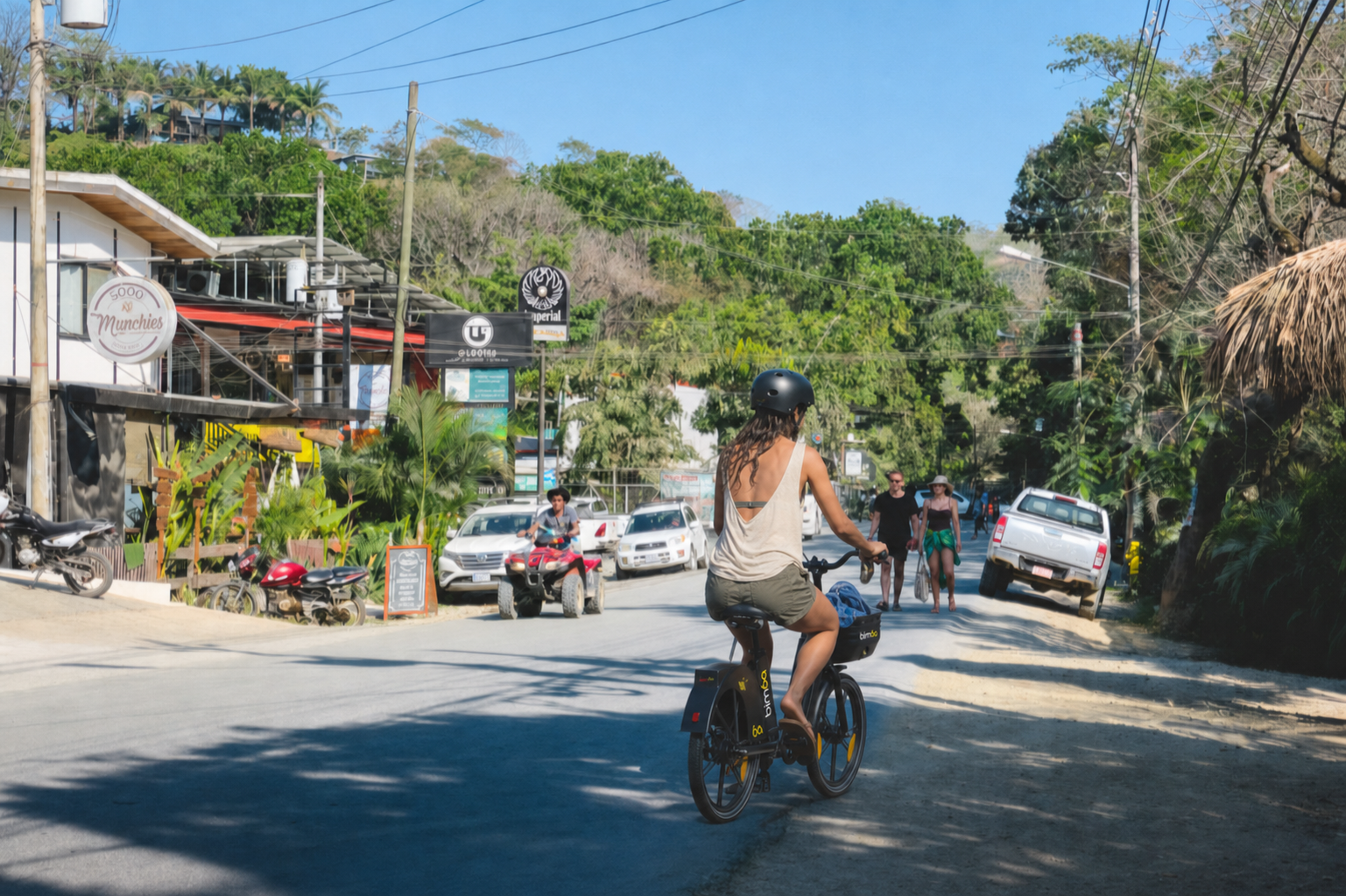
Playa Hermosa de Cóbano is the best choice when the goal is a long, open beach and a calmer pace away from central Santa Teresa's busiest zones. The full name matters. Costa Rica has several places called Playa Hermosa, including well-known beaches in Guanacaste and near Jacó; put ‘de Cóbano, Puntarenas’ into the map search.
Hermosa is often recommended for lessons or less experienced surfers when the water is suitable, but online sources disagree about which beach is most beginner-friendly. That disagreement is the lesson: ability labels should follow the actual swell, tide and instructor assessment, not the beach name. Some days Hermosa may be forgiving; on another day it can be powerful.
The beach sits north of the current 25-location Bimba directory published on the site. Do not plan to finish a shared ride there unless the live app explicitly shows an eligible point and operating boundary. For a dedicated Hermosa day, confirm transport both ways before leaving central Santa Teresa.
Best for the Classic Santa Teresa Surf Atmosphere
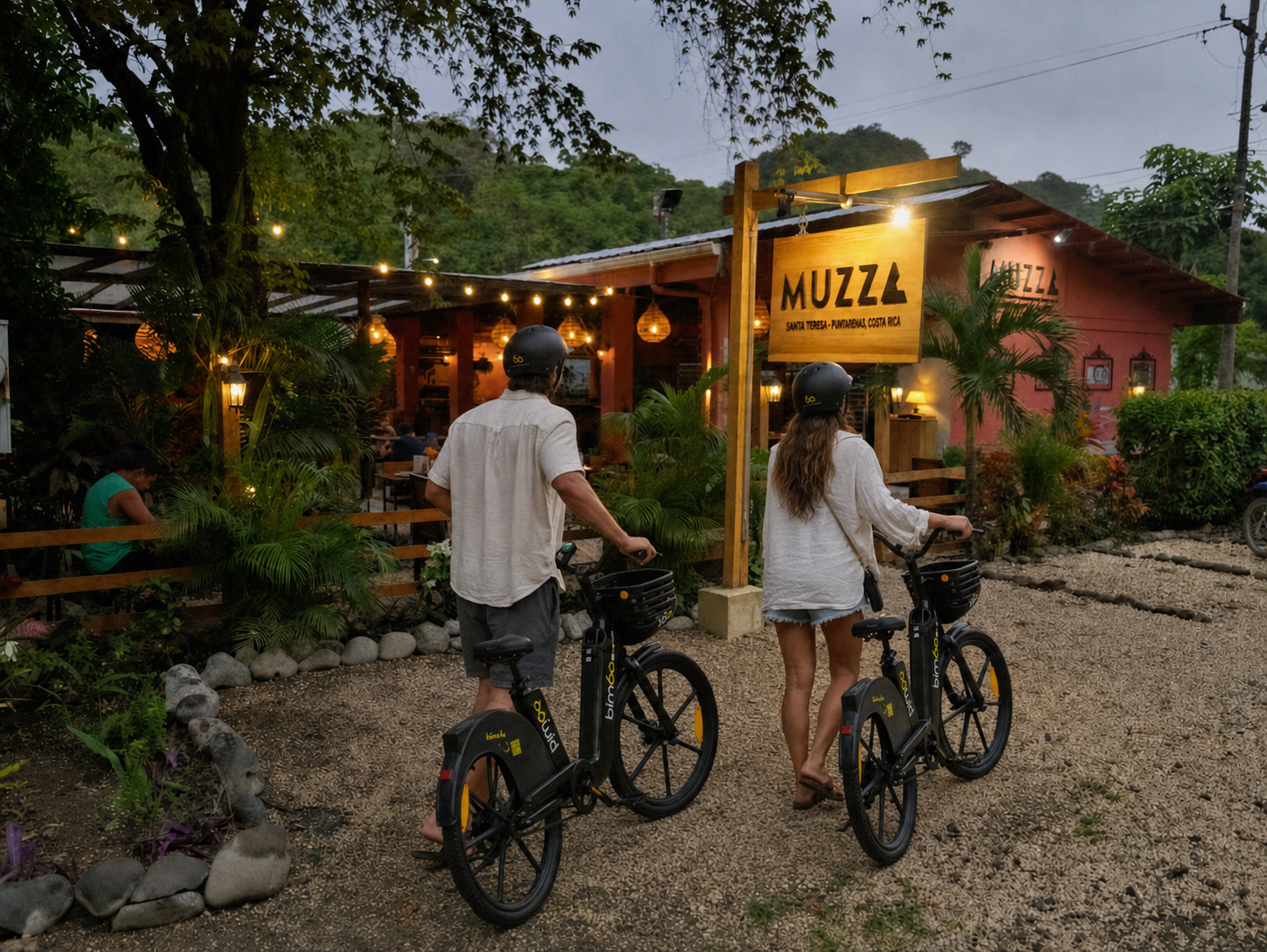
Central Playa Santa Teresa delivers the image many visitors have in mind: a long Pacific beach, boards moving toward the water, an active lineup and a west-facing sunset. It is the strongest choice when surf culture and proximity to central food are more important than finding the quietest sand.
The central coastline is not one identical break. Locals distinguish access areas and shifting peaks, and the best-looking wave from the beach may be beyond your current ability. Watch for several sets before entering, observe where other surfers paddle out and ask a qualified instructor to choose the section.
Non-surfers can enjoy the same beach for walking and sunset, but the open Pacific deserves distance and attention. Keep shoes and belongings above the reach of changing water, avoid sitting below unstable banks or palms, and leave enough light for the return.
Best for Confident Surfers: La Lora
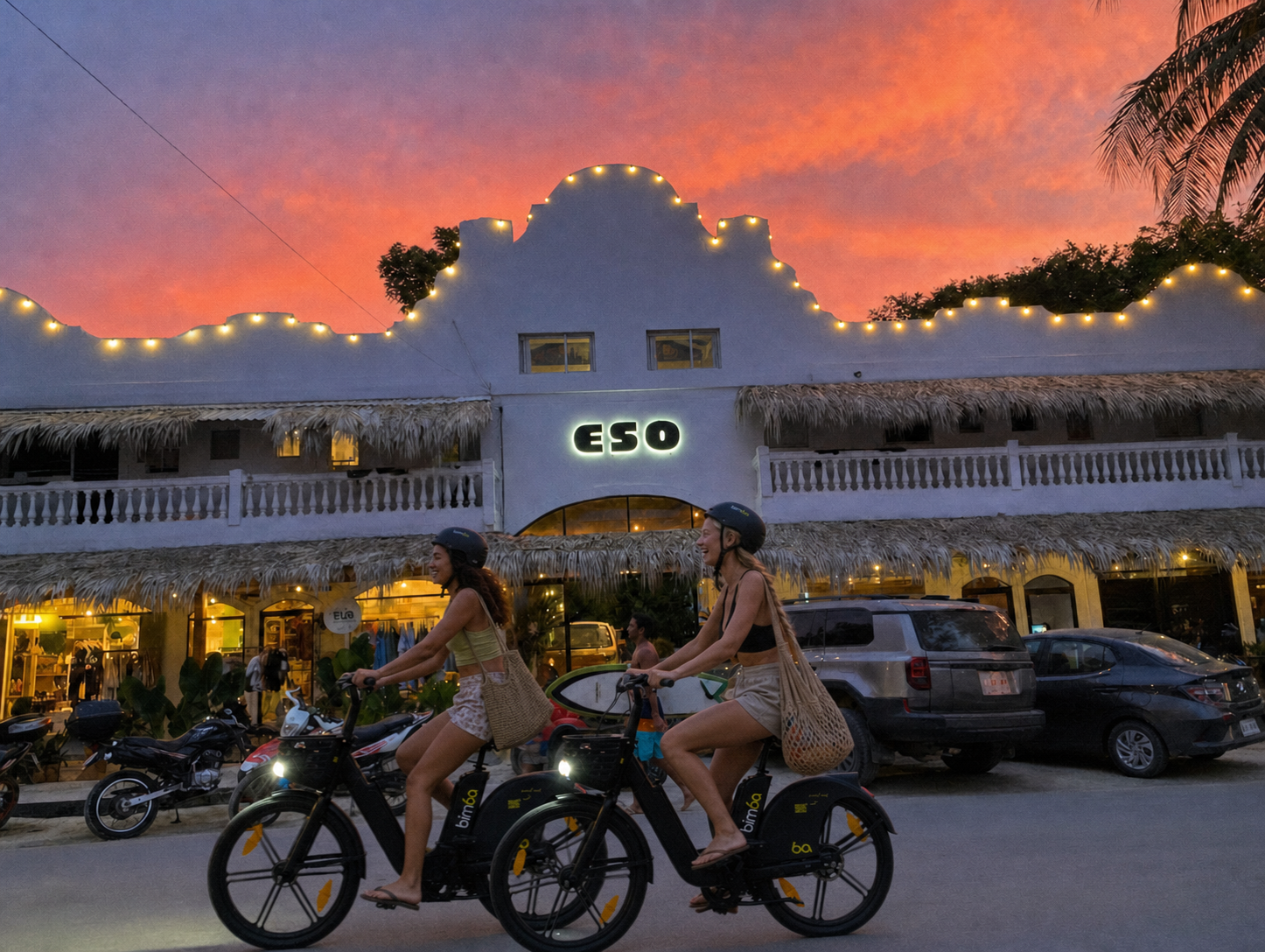
La Lora is a locally recognized central-to-northern Santa Teresa beach and surf zone. It suits visitors who already understand lineups, currents, board control and the difference between riding white water and paddling into unbroken waves. It is also a good place to watch experienced surfers without pretending every visible peak is suitable for everyone.
Conditions can change across the tide. A surf guide that calls La Lora intermediate or advanced is describing typical use, not posting a permanent rating. Crowds add another layer: the safe choice depends on wave power, ability and whether the lineup leaves enough space to react.
For a non-surf beach day, La Lora offers sand and sunset but fewer reasons to cross town if an equally good beach sits beside your accommodation. The better vacation is often the beach that removes two unnecessary road journeys.
Rocamar and Suck Rock: Know the Difference
Rocamar is a northern Santa Teresa area and access reference; Suck Rock is the name used for a more serious rocky surf break nearby. They should not be collapsed into a generic family-beach recommendation. A traveler asking for Rocamar may mean the coastal area, while a surfer asking about Suck Rock is asking about a specific break.
This is primarily a spot for experienced surfers to evaluate or for other visitors to observe from a safe position. Rocks, wave energy and access make it a poor place to improvise a first surf session. Do not climb onto exposed rock platforms when swell is reaching them.
Use the broader Santa Teresa beach map and access guide to identify the area, then ask a local professional about the break. This page deliberately owns the suitability decision; the destination guide owns the precise orientation.
Best for Rocky Coastal Scenery: Playa Mal País
Playa Mal País has a different character from the continuous sandy image associated with central Santa Teresa. The southern coast includes rock formations, coves, the local fishing-boat area and natural pools that become visible under suitable low-water conditions.
It is not one uniform swimming beach. A protected-looking pocket can change as the tide rises, and exposed rocks can receive unexpected sets. Respect the working fishing area, keep launch routes clear and never place bags or vehicles where boats and trailers need to move.
Travelers specifically interested in the pools should use the Mal País tide pools guide. That page owns the tide-timing and rock-access intent, preventing this best-beaches article from duplicating it.
Best Small-Cove Outing: Playa Cuevas or Los Suecos
Playa Cuevas and Los Suecos are names used for the same compact cove at the far southern end beyond the Mal País fishing zone. Visit Costa Rica places it roughly one kilometer from Playa Mal País and describes a small parking area followed by an approximately 75-meter path.
The official tourism source warns that the final road can be poor enough for a 4x4 to be preferable. That makes Cuevas a planned outing, not a casual extension of a Bimba ride. It lies beyond the site's published southern station network; use suitable transport and keep the route out clear.
The cove is sometimes promoted for calmer water or snorkeling at low tide, but this must never become a promise. Check swell, tide and visibility on arrival. Stay out when waves reach the rocks or cave edges, and take every item of waste back with you.
Playa Mar Azul: A Specific Mal País Alternative
Mar Azul is a named cove and surf reference between the southern fishing area and Playa Carmen. It works for travelers who want a more specific Mal País stop and are prepared to confirm access, rather than simply following a broad pin labelled ‘Mal País beach.’
The cove combines sand and rock, while the named point is surf information rather than a universal swimming endorsement. Watch the ocean, ask locally and keep the narrow approach open. Phone maps may place the marker on the shoreline instead of the usable public entrance.
Creativo ART Center is the closest useful Bimba network anchor discussed in the destination guide, but it is north of Mar Azul and is not beach parking. The live app must approve the end point, and the remaining walk and daylight need to make sense.
Can You Safely Swim at Santa Teresa Beaches?
Santa Teresa faces the open Pacific and is famous for surf. That alone should stop any article from declaring one beach permanently ‘safe for swimming.’ Rip currents, shore break, swell and sandbars change, and not every access has lifeguard coverage.
A cautious swim means selecting the calmest appropriate section on the actual day, staying close enough to stand, keeping children within reach and avoiding alcohol before entering. If the water is moving along the beach, pulling outward, breaking heavily at the shore or making you uncertain, stay out.
Playa Carmen and Playa Hermosa are often mentioned in swimming and beginner-surf discussions, but neither name is a safety certificate. Ask someone who can see the water now. When the priority is guaranteed calm water rather than a surf beach experience, an open-Pacific beach may simply be the wrong product for the day.
- Never swim alone or after drinking.
- Keep children within arm's reach around moving water.
- Do not use an inflatable toy as safety equipment.
- If caught in a rip current, conserve energy, signal for help and move parallel to shore when possible rather than fighting directly against it.
- When in doubt, choose a beach walk and watch the water instead.
Which Beach Is Best for Beginner Surf Lessons?
The honest answer is whichever sandy section a reputable instructor selects after looking at the day's conditions. Current local surf pages frequently name Playa Carmen and Playa Hermosa de Cóbano for lessons, while central Santa Teresa can be more powerful. Yet even Carmen or Hermosa can exceed a beginner's ability under larger swell.
A first lesson should include board control on land, a clearly defined practice zone and an explanation of currents, etiquette and how to fall. Ask whether the instructor is insured, what the student-to-instructor ratio is and whether the lesson location can change with conditions.
Do not rent a board based only on the beach ranking and paddle into an unfamiliar lineup. A foam board does not remove wave energy, current or collision risk.
| Ability | Better decision process | Avoid |
|---|---|---|
| First session | Qualified lesson at the section chosen that morning | Selecting a break from an old article |
| Beginner catching white water | Sandy area with space and active supervision | Crowded peaks and strong lateral current |
| Improving beginner | Instructor-led move toward unbroken waves | Assuming yesterday's easy conditions remain |
| Intermediate | Match board and break to tide, crowd and swell | Overstating ability to follow friends |
| Advanced | Evaluate La Lora, central peaks or rocky breaks locally | Treating a named break as automatically working |
Best Beach for Sunset
Every west-facing stretch from Playa Carmen through Santa Teresa and north toward Hermosa can produce a memorable sunset. The best sunset beach is therefore usually the one with the simplest safe return, not the one with the most dramatic pin online.
Central Santa Teresa and Playa Carmen combine open views with nearby businesses. Hermosa offers more space but needs a confirmed ride when your accommodation is elsewhere. Mal País adds rocky foregrounds, but exposed surfaces and the journey back become more demanding as light disappears.
Arrive before the final color, place valuables where you can see them and decide the return before sunset begins. Never ride a Bimba or any two-wheel vehicle after alcohol, in unsafe darkness or when the route lies outside the active service area.
Best Beach for Families
For many families, Playa Carmen is the easiest base because food, toilets at participating businesses, lessons and transport are more straightforward to organize. Playa Hermosa can offer more space for sand play. Neither removes the need for continuous adult supervision at the waterline.
Choose the beach using the least flexible family member. A stroller, shade needs, nap schedule, heat tolerance and the walk from parking can matter more than a ranking. Carry water, sun protection and a simple plan for leaving early.
Avoid isolated rock shelves, unsupervised swimming and leaving children with bodyboards in shore break. If the ocean is not appropriate, build the day around sand, a walk, food and sunset rather than forcing water time.
How Tide, Swell and Season Change the Ranking
A beach ranking is only a starting point because Santa Teresa's coastline changes with Pacific swell, local wind, tide and moving sand. Dry-season mornings often attract visitors seeking cleaner, smaller surf, while green-season swells and rain can increase power, runoff and access difficulty. Those are tendencies, not forecasts.
Tide affects the width of usable sand, exposed rocks and how a wave breaks. Swell period and direction can matter as much as wave height. A forecast number without local knowledge may understate the energy reaching a particular break.
Check a current marine forecast, observe at least several sets and ask someone reputable on the beach. The latest condition always outranks this article.
| Variable | What it can change | Action |
|---|---|---|
| Tide | Sand width, rocks and breaking shape | Recheck access and exit before settling |
| Swell | Wave energy, currents and paddle difficulty | Match the section to real ability |
| Wind | Surface quality and drifting equipment | Prefer an earlier or calmer window when appropriate |
| Rain | Visibility, runoff and road access | Shorten, postpone or change transport |
| Crowd | Collision risk and available space | Choose another peak or stay on shore |
A Three-Day Beach Plan Without Crossing Town Repeatedly
Day one can center on Playa Carmen: learn the coastline, arrange a lesson if appropriate, eat nearby and watch sunset without adding a second beach. Day two can focus on central Santa Teresa and La Lora, comparing the water from shore before choosing one area. Day three can become a dedicated northern Hermosa outing or a southern Mal País and Cuevas plan—not both.
This geographic grouping preserves more beach time and reduces road exposure. It also makes Bimba pricing easier to evaluate: a short in-zone journey may fit the live service, while Hermosa, Manzanillo or Cuevas require a different transport plan.
For detailed mobility comparisons, read how to get around Santa Teresa. For station-by-station beach orientation, return to the Santa Teresa destination and access guide.
Responsible Beach Use
- Use signed or clearly public beach access and never cross private property.
- Take every piece of rubbish, cigarette waste and food packaging away.
- Keep vehicles, bikes and scooters off the sand unless an authorized operation specifically permits access.
- Do not touch wildlife, feed animals or approach nesting areas.
- Use reef-conscious sun protection and avoid leaving plastic items where wind can carry them.
- Keep music low and respect residents, workers, fishers and other beach users.
- Do not publish or follow directions that damage an informal path or sensitive coastal area.
Frequently Asked Questions About Santa Teresa Beaches
What is the best beach in Santa Teresa for a first visit?
Playa Carmen is the strongest all-round starting point because it combines a broad beach with familiar services and easier planning. Verify the water before entering.
Which beach is quietest near Santa Teresa?
Playa Hermosa de Cóbano often feels more spacious than central Santa Teresa. Playa Manzanillo is farther north and works as a separate outing.
Is Playa Santa Teresa good for swimming?
It is an open-Pacific surf coast, so swimming suitability changes with tide, swell and currents. Ask locally on the day and stay out when uncertain.
Where should beginners surf?
Playa Carmen and Playa Hermosa are often used for lessons when conditions fit. Let a qualified instructor select the exact section and time.
Is Mal País the same beach as Santa Teresa?
No. Mal País is the southern neighboring area with rockier coastal sections, coves and a working fishing zone. It has a different character from central Santa Teresa.
Are Playa Cuevas and Los Suecos the same place?
Yes, both names are used for the small cove south of Mal País. Access and ocean conditions require advance checking.
Can I take a Bimba to Playa Hermosa or Manzanillo?
The published 25-location directory ends in northern Santa Teresa. Use the live app as the source of truth and choose other transport when no approved end point or service boundary is shown.
Which beach has the best sunset?
Playa Carmen, central Santa Teresa, La Lora and Hermosa all face west. Choose the beach with the safest and simplest return after dark.
Sources and Editorial Method
This guide was reviewed against the Costa Rica Tourism Board's Puntarenas guide, the official Visit Costa Rica Playa Cuevas / Los Suecos information, current local surf-school and surf-guide pages, and Bimba's verified locations directory. Surf marketing claims were treated as viewpoints rather than permanent safety facts.
Bimba operates shared electric mobility in Santa Teresa and may benefit when a reader uses the service. That commercial relationship does not change the recommendation to use a taxi, car, shuttle or other suitable transport when a beach lies outside the live service area, when conditions are unsafe or when the trip includes passengers, luggage or darkness.
Reviewed August 6, 2026. Send a correction with the page URL, specific beach detail and supporting source to hello@gobimba.com. Live ocean, access and business information should be checked again close to the visit.